|
Yoga
Suntouched
Yoga & Wellness 
Profiles Mind,
Body and Spirit Health Sports Interviews
'Diamond'
Dallas Page. Founder of DDP Yoga and professional wrestling legend - January 2019
Promotions Yoga:
News, Articles, Interviews, Promotions, Advertising, Exposure via Media Man Promote
your sports, extreme sports, combat sports, pro wrestling, MMA, surfing, eSports,
gaming products and services via Media Man network
Relax
Coogee (meditation). Coogee Beach, Sydney, Australia 

Diamond
Dallas Page aka DDP Hashtag
Yogi 
Profiles Wrestling
Wrestling
Legends WWE Yoga 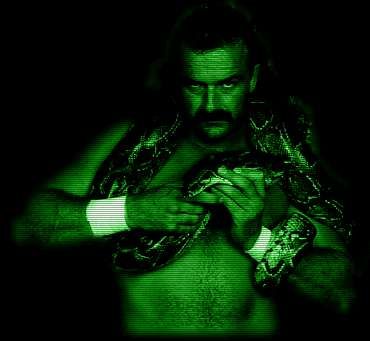
News DDP
Talks Chris Jericho "Owning It At A Different Level", David Arquette
In The WWE Royal Rumble - 23rd January 2019 Jake
'The Snake' Roberts to move in with Diamond Dallas Page, train for one last pro
wrestling run - 28th October 2012
(Newsday.com) Former
WCW World Heavyweight Champion Diamond Dallas Page has worked with several pro
wrestlers on their aches and pains via his DDP Yoga system. But
Monday he begins perhaps his biggest challenge when Jake “The Snake”
Roberts moves in with Page in a home Page recently bought in Atlanta. Roberts,
whose wrestling career was derailed multiple times by substance abuse issues,
will train with Page while cameras roll for a planned documentary. The idea is
to get Roberts, 57, back in good enough shape for one more run in the wrestling
business. Page,
56, told newsday.com Sunday that he called Roberts -- whose weight had ballooned
up to 302 pounds -- in Roberts’ hometown of Gainesville, Texas three months
ago. TWITTER:
@JoshNASCARWWE “And
I told him, ‘If you can really do this -- and you have to prove it to me
[by doing the program] for six or eight weeks,” Page said. “‘I’ll
freakin’ get a place in Atlanta. I’ll bring you up, and we’ll continue
this journey.’” Roberts
was filmed in Texas when he started the yoga program, which Page developed to
deal with the injuries he suffered while in the squared circle. Page said that
Roberts lost 20 pounds in the first 3 ½ weeks of training and is now down
approximately 35 pounds. “Jake
does not want to be seen the way he was seen at the end,” Page said. Roberts’
demons have been chronicled in the 1999 Barry Blaustein documentary “Beyond
the Mat” -- which included Roberts interviewed in a hotel room after apparently
smoking crack -- and the 2005 WWE-produced DVD “Jake ‘The Snake’
Roberts: Pick Your Poison.” Roberts’ attempts to clean up includes a
1996 return to a WWE after a three-plus year hiatus in which his real-life born-again
Christian convictions were incorporated into his storylines. Along
with the physical training, Page and filmmaker Steve Yu wil work on things like
getting the computer-deficient Roberts up to date on using Facebook and Twitter.
Page says the idea is to keep Roberts busy with positive activities so he won’t
backslide into past habits. “That
house, I reached out to a couple of my friends, and asked, ‘What are we going
to call my new crib?’ And we came up with ‘Accountability Crib,’
you’re accountable for everything.” To
that end, Page and Yu said that Roberts will be drug-tested while he’s in
the home. “If
he does that [stuff] one time while he’s with me, he’s gone,” Page
said. But
Page is encouraged by what Roberts has already accomplished, losing as much weight
as he has after having being so out of shape in his first workout he couldn’t
do more than a couple of exercises without needing rest. “Bottom
line is, everybody wants the comeback story,” Page said. “Everybody
wants to see Jake look good, and feel good, and not be a mess anymore. That would
be great. I think there are a lot of really positive things that can come out
of this if Jake really does it.” Check
back to newsday.com in the coming days for additional coverage. Yoga
is a group of ancient spiritual practices originating in India. As a general term
in Hinduism it has been defined as referring to "technologies or disciplines
of asceticism and meditation which are thought to lead to spiritual experience
and profound understanding or insight into the nature of existence." Yoga
is also intimately connected to the religious beliefs and practices of the other
Indian religions. Outside
India, Yoga is mostly associated with the practice of asanas (postures) of Hatha
Yoga or as a form of exercise, although it has influenced the entire Indian religions
family and other spiritual practices throughout the world. Hindu
texts discussing different aspects of yoga include the Upanishads, the Bhagavad
Gita, the Yoga Sutras of Patanjali, the Hatha Yoga Pradipika, the Shiva Samhita,
and many others. Major
branches of Yoga include: Hatha Yoga, Karma Yoga, Jnana Yoga, Bhakti Yoga, and
Raja Yoga. Raja Yoga, known simply as Yoga in the context of Hindu philosophy,
is one of the six orthodox (astika) schools of thought, established by the Yoga
Sutras of Patanjali. Etymology The
Sanskrit term yoga has a wide range of different meanings. It is derived from
the Sanskrit root yuj, "to control", "to yoke", or "to
unite". Common meanings include "joining" or "uniting",
and related ideas such as "union" and "conjunction". Another
conceptual definition is that of "mode, manner, means" or "expedient,
means in general" History Indus
Valley seals Several
seals discovered at Indus Valley Civilization (c. 3300–1700 BC) sites depict
figures in a yoga or meditation like posture. The most widely known of these was
named the "Pashupati seal" by its discoverer, John Marshall, who believed
that it represented a "proto-Shiva" figure. Many modern authorities
discount the idea that this "Pashupati" (Lord of Animals, Sanskrit pasupati)represents
a Shiva or Rudra figure. There
is considerable evidence to support the idea that the image's posture "is
a form of ritual discipline, suggesting a precursor to yoga" according to
archaeologist Gregory Possehl (who also questions the proto-Shiva theory). He
points to sixteen other specific "yogi glyptics" in the corpus of Mature
Harappan artifacts as pointing to Harappan devotion to "ritual discipline
and concentration". These images show that the yoga pose "may have been
used by deities and humans alike". He suggests that yoga goes back to the
Indus Valley Civilization. Gavin
Flood characterizes these views as "speculative", saying that it is
not clear from the 'Pashupati' seal that the figure is seated in a yoga posture,
or even that the shape is intended to represent a human figure, though it is nevertheless
possible that there are echoes of Shaiva iconographic themes, such as half-moon
shapes resembling the horns of a bull. Other authorities do support the idea that
the 'Pashupati' figure shows a figure in a yoga or meditation posture. They include
Archaeologist Jonathan Mark Kenoyer, current Co-director of the Harappa Archaeological
Research Project in Pakistan and Indologist Heinrich Zimmer. In
2007, terracotta seals were discovered in the Cholistan Desert in Pakistan. Punjab
University Archaeology Department Chairman Dr. Farzand Masih described one of
the seals as similar to the previously discovered Mohenjodaro seals, with three
pictographs on one side and a "yogi" on the other side. Literary
sources Ascetic
practices (tapas) are referenced in the Brahma?as (900 BCE and 500 BCE), early
commentaries on the vedas. In the Upanishads, an early reference to meditation
is made in Brihadaranyaka Upanishad, one of the earliest Upanishads (approx. 900
BCE). The main textual sources for the evolving concept of Yoga are the middle
Upanishads, (ca. 400 BCE), the Mahabharata (5th c. BCE) including the Bhagavad
Gita (ca. 200 BCE), and the Yoga Sutras of Patanjali (200 BCE-300 CE).
Bhagavad Gita The
Bhagavad Gita ('Song of the Lord'), uses the term yoga extensively in a variety
of senses. Of many possible meanings given to the term in the Gita, most emphasis
is given to these three:
* Karma yoga: The yoga of action
* Bhakti yoga: The yoga of devotion
*
Jnana yoga: The yoga of knowledge The
influential commentator Madhusudana Sarasvati (b. circa 1490) divided the Gita's
eighteen chapters into three sections, each of six chapters. According to his
method of division the first six chapters deal with Karma yoga, the middle six
deal with Bhakti yoga, and the last six deal with Jnana (knowledge). This interpretation
has been adopted by some later commentators and rejected by others.
Yoga Sutras of Patanjali
Raja Yoga and Yoga Sutras of Patanjali In
Indian philosophy, Yoga is the name of one of the six orthodox philosophical schools.
The Yoga philosophical system is closely allied with the Samkhya school. The Yoga
school as expounded by Patanjali accepts the Samkhya psychology and metaphysics,
but is more theistic than the Samkhya, as evidenced by the addition of a divine
entity to the Samkhya's twenty-five elements of reality. The parallels between
Yoga and Samkhya were so close that Max Müller says that "the two philosophies
were in popular parlance distinguished from each other as Samkhya with and Samkhya
without a Lord...." The intimate relationship between Samkhya and Yoga is
explained by Heinrich Zimmer:
These two are regarded in India as twins, the two aspects of a single discipline.
Sa?khya provides a basic theoretical exposition of human nature, enumerating and
defining its elements, analyzing their manner of co-operation in a state of bondage
(bandha), and describing their state of disentanglement or separation in release
(mok?a), while Yoga treats specifically of the dynamics of the process for the
disentanglement, and outlines practical techniques for the gaining of release,
or 'isolation-integration' (kaivalya). The
sage Patanjali is regarded as the founder of the formal Yoga philosophy. The Yoga
Sutras of Patanjali are ascribed to Patanjali, who, may have been, as Max Müller
explains, "the author or representative of the Yoga-philosophy without being
necessarily the author of the Sutras." Indologist Axel Michaels is dismissive
of claims that the work was written by Patanjali, characterizing it instead as
a collection of fragments and traditions of texts stemming from the second or
third century. Gavin Flood cites a wider period of uncertainty for the composition,
between 100 BCE and 500 CE. Patanjali's
yoga is known as Raja yoga, which is a system for control of the mind. Patanjali
defines the word "yoga" in his second sutra, which is the definitional
sutra for his entire work:
- Yoga Sutras 1.2 This
terse definition hinges on the meaning of three Sanskrit terms. I. K. Taimni translates
it as "Yoga is the inhibition (nirodha?) of the modifications (v?tti) of
the mind (citta)". Swami Vivekananda translates the sutra as "Yoga is
restraining the mind-stuff (Citta) from taking various forms (Vrittis)."
Gavin Flood translates the sutra as "yoga is the cessation of mental fluctuations".
A sculpture of a Hindu yogi in the Birla Mandir, Delhi
A sculpture of a Hindu
yogi in the Birla Mandir, Delhi Patanjali's
writing also became the basis for a system referred to it as "Ashtanga Yoga"
("Eight-Limbed Yoga"). This eight-limbed concept derived from the 29th
Sutra of the 2nd book became a feature of Raja yoga, and is a core characteristic
of practically every Raja yoga variation taught today. The Eight Limbs of yoga
practice are:
(1) Yama (The five "abstentions"): nonviolence, truth, non-covetousness,
chastity, and abstain from attachment to possessions.
(2) Niyama (The five
"observances"): purity, contentment, austerities, study, and surrender
to god
(3) Asana: Literally means "seat", and in Patanjali's Sutras
refers to seated positions used for meditation. Later, with the rise of Hatha
yoga, asana came to refer to all the "postures"
(4) Pranayama ("Lengthening
Prana"): Prana, life force, or vital energy, particularly, the breath, "ayama",
to lengthen or extend
(5) Pratyahara ("Abstraction"): Withdrawal
of the sense organs from external objects.
(6) Dharana ("Concentration"):
Fixing the attention on a single object
(7) Dhyana ("Meditation"):
Intense contemplation of the nature of the object of meditation
(8) Samadhi
("Liberation"): merging consciousness with the object of meditation It
details every aspect of the meditative process, and the preparation for it. The
book is available in as many as 40 English translations, both in-print and on-line.
Hatha Yoga Pradipika
Hatha yoga Hatha
Yoga is a particular system of Yoga described by Yogi Swatmarama, a yogic sage
of the 15th century in India, and compiler of the Hatha Yoga Pradipika. Hatha
Yoga is a development of — but also differs substantially from — the
Raja Yoga of Patanjali, in that it focuses on shatkarma, the purification of the
physical as leading to the purification of the mind (ha) and prana, or vital energy
(tha). In contrast, the Raja Yoga posited by Patanjali begins with a purification
of the mind (yamas) and spirit (niyamas), then comes to the body via asana (body
postures) and pranayama (breath). Hatha yoga contains substantial tantric influence,
and marks the first point at which chakras and kundalini were introduced into
the yogic canon. Compared to the seated asanas of Patanjali's Raja yoga which
were seen largely as a means of preparing for meditation, it also marks the development
of asanas as full body 'postures' in the modern sense. Hatha
Yoga in its many modern variations is the style that most people actually associate
with the word "Yoga" today. Because its emphasis is on the body through
asana and pranayama practice, many western students are satisfied with the physical
health and vitality it develops and are not interested in the other six limbs
of the complete Hatha yoga teaching, or with the even older Raja Yoga tradition
it is based on.
Yoga in other traditions Yoga
and Buddhism Yoga
is intimately connected to the religious beliefs and practices of the Indian religions.
The influence of Yoga is also visible in Buddhism, which is distinguished by its
austerities, spiritual exercises, and trance states.
Yogacara Buddhism Yogacara
(Sanskrit: "Practice of Yoga [Union]" ), also spelled yogachara, is
a school of philosophy and psychology that developed in India during the 4th to
5th centuries. Yogacara
received the name as it provided a yoga, a framework for engaging in the practices
that lead to the path of the bodhisattva. The Yogacara sect teaches yoga in order
to reach enlightenment.
Ch`an (Zen) Buddhism Zen
(the name of which derives from the Sanskrit "dhyana" via the Chinese
"ch'an") is a form of Mahayana Buddhism. The Mahayana school of Buddhism
is noted for its proximity with Yoga. In the west, Zen is often set alongside
Yoga; the two schools of meditation display obvious family resemblances. This
phenomenon merits special attention since the Zen Buddhist school of meditation
has some of its roots in yogic practices. Certain essential elements of Yoga are
important both for Buddhism in general and for Zen in particular.
Tibetan Buddhism Yoga
is central to Tibetan Buddhism. In the Nyingma tradition, practitioners progress
to increasingly profound levels of yoga, starting with Maha yoga, continuing to
Anu yoga and ultimately undertaking the highest practice, Ati yoga. In the Sarma
traditions, the Anuttara yoga class is equivalent. Other tantra yoga practices
include a system of 108 bodily postures practiced with breath and heart rhythm.
Timing in movement exercises is known as Trul khor or union of moon and sun (channel)
prajna energies. The body postures of Tibetan ancient yogis are depicted on the
walls of the Dalai Lama's summer temple of Lukhang.
Yoga and Tantra Tantrism,
is a practice that is supposed to alter the relation of the individual practitioner
of Tantrism to the ordinary social, religious, and logical reality in which he
or she lives. Through Tantric practice an individual perceives reality as maya,
illusion, and the individual achieves liberation from it. This
particular path to salvation among the several offered by Hinduism, links Tantrism
to those practices of Indian religions, such as yoga, meditation, and social renunciation,
which are based on temporary or permanent withdrawal from social relationships
and modes. During
tantric practices and studies, the student is instructed further in meditation
technique, particularly chakra meditation. This is often in a limited form in
comparison with the way this kind of meditation is known and used by Tantric practitioners
and yogis elsewhere, but is more elaborate than the initiate's previous meditation.
It is considered to be a kind of Kundalini Yoga for the purpose of moving the
Goddess into the chakra located in the "heart,"
for meditation and worship.
Goal of Yoga There
are numerous opinions on what the goal of Yoga may be, although generally they
involve some kind of union, either of a personal or a non-personal nature. Within
the monist schools of Advaita Vedanta and Shaivism this perfection takes the form
of Moksha, which is a liberation from all worldly suffering and the cycle of birth
and death (Samsara) at which point there is a cessation of thought and an experience
of blissful union with the Supreme Brahman. For the dualistic bhakti schools of
Vaishnavism, bhakti itself is the ultimate goal of the yoga process, wherein perfection
culminates in an eternal relationship with Vishnu or one of his associated avatars
such as Krishna or Rama.
(Credit: Wikipedia). |