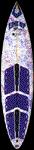
|
Surfing
Media
Man Surfing Facebook Surfing
Blog 
Beach
Culture, Surf Culture and Pop Culture greats to put on your A List says Media
Man agency 
American
and Australian b2b agency deal enjoying strong success in global downturn period Interviews Interview:
Bianca Buitendag - Professional surfer - July 2017 Lin
Sutherland, Producer, Journalist and Environmentalist - 14th November 2006 Mal
Jago, CoastalWatch - 29th May 2003 Interview:
Surfer Spud, Musician, Drifting Sand - 15th October 2013 Interview:
Mike Antipow, The Vivisectors, Musician: 8th September 2003 News BeachGrit
social media enjoying positive ride; Maroubra Beach, Bondi Beach, Newport Beach
connection, media identity and extremely average surfer heating up discussions Australian
surfing coverage friendly war heats up 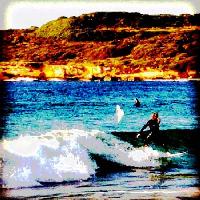
LONGTOM
AND THE CASE FOR THE WSL’S BILLION-DOLLAR WAVEPOOL DEVELOPMENT PART III:
“WHAT CAN’T BE DENIED ARE THE JOBS AND GROWTH!” - 8th December
2019 REPORT:
MYSTERIES REVEALED, WEAKNESSES EXPOSED AFTER TEN HOURS AND 150 WAVES IN MELBOURNE
TANK! - 15th December 2019 Surf
Culture and Beach Culture promotions, photography and photo art via Media Man
Int, Media Man Australia and Australian Sports Entertainment There
Will Be Over 50 'Fight For the Bight' Paddle-Outs Across Australia This Saturday
- 19th November 2019 Golden
Breed retro surf culture advertising campaign catches eye of media and sports
agent with fond Golden Breed memories Surfers
to clean up Sydney Harbour on Sunday 3rd March 2019 Beach
culture, surf culture and nature photography OneWave
Is All It Takes wins Media Man 'Charity - Worthy Cause Of The Month' Award -
October
2018 Directory Surfing
industry Media Man online showcase Multimedia FIRE
ON THE MOUNTAIN (2019) WATCH:
FAMOUS PODCASTER JOE ROGAN SHOCKED AND OUTRAGED UPON LEARNING THE COST FOR ONE
HOUR AT KELLY SLATER’S SURF RANCH! - 18th December 2019 Surf
Culture and Beach Culture promotions, photography and photo art via Media Man
Int, Media Man Australia and Australian Sports Entertainment
Promotions
JOIN
THE WORLD FLURO WAVE FOR MENTAL HEALTH Sports
Apparel Showcased via Media Man Group Surfish
Cafe, Bondi Beach, Sydney, Australia 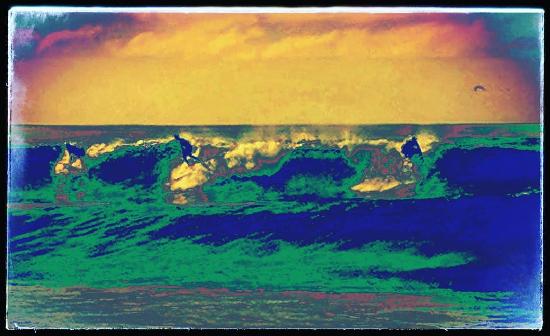
Psychedelic
Surfers. Photoart by Greg Tingle Greg
Tingle Photography Facebook
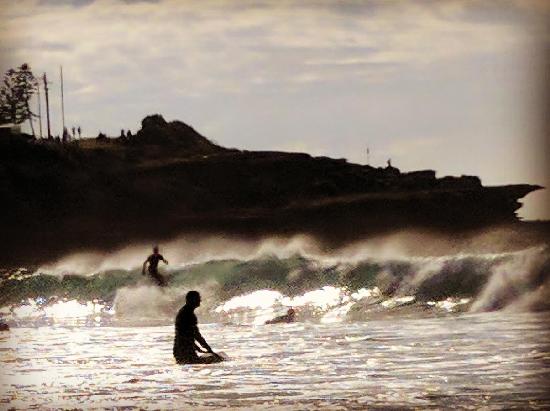
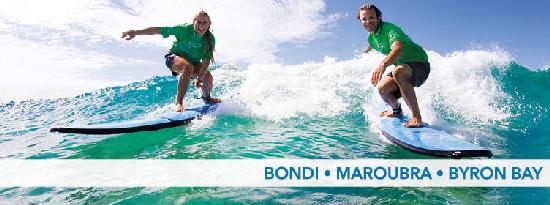
Maroubra
Surfer. Photoart by Greg Tingle 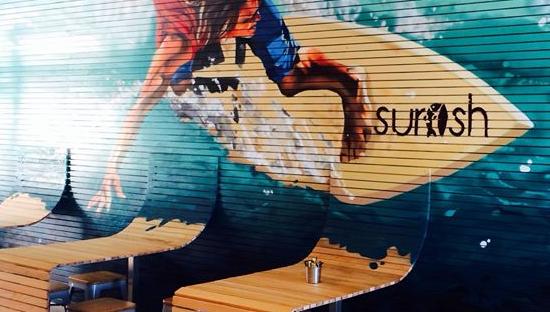
Maroubra
to host Carve Pro surf event - 11th January 2016 Bra
Boys revive North Maroubra Boardriding club to get wayward youth off the streets
and into the water Kelly's
Wave (multimedia) 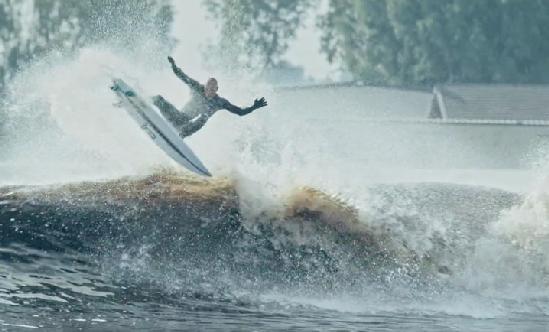
Promotions Advertising,
Promotions, Publicity: Special rates for Bondi Beach, Bondi Junction, Coogee,
Maroubra Junction; Sydney, Australia Mojo
Downunder Calendar Photo Shoots Let's
Put Our Businesses On The Map with Google presentation on 22nd April 2016 at Bondi
Beach Bondi
Bubble App Launch Party News Grey
nurse shark netted off Bondi Beach - 20th December 2007
Profiles
Koby
Abberton CoastalWatch
The Bra Boys Mark
Visser Dave
Rastovich Sacha Alagich 
The
Silver Surfer online slot game News Google
News search for "surfing australia" Google
News search for "australian surfing" 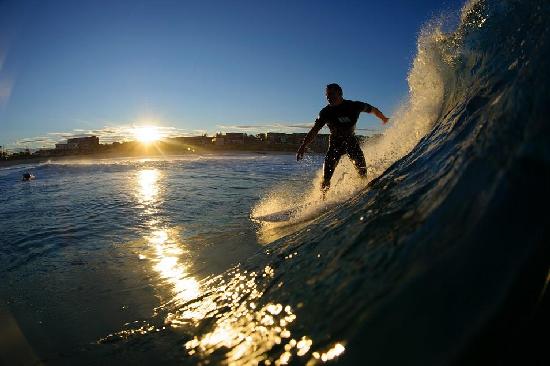
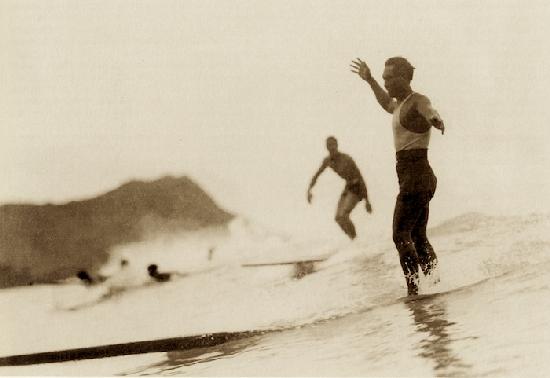
Surfing
is a surface water sport in which the participant is carried by a breaking wave
usually on a surfboard to the shore. As well as surfboards surfers make use of
kneeboards, body boards, kayaks, surf skis and their own bodies. Derivatives of
surfing make use of other elements, such as the wind, these include kitesurfing
and windsurfing. Further
sub-divisions reflect differences in surfboard design, such as long-boards and
short-boards. Additional Tow-in surfing involves motorized craft to tow the surfer
onto the wave, this is associated with big wave surfing, where standard paddling
is unwise due to the the waves rapid forward motion. History
Surfing was first recorded in Hawaii by Lieutenant James King, who's task it was
to complete the journals of James Cook after his death in 1779. However, by this
time surfing had already become an integral part of Hawaiian culture [1] with
surfers riding waves lying down or standing on long hardwood boards. Surfing
was as much as a part of Hawaiian life as many major sports are part of western
life today. It permeated every part of Hawaiian society including religion and
myth. Hawaiian Chiefs would demonstrate their leadership by the skills they possessed
on the surf.
The Science of Surfing Waves Several
factors influence the shape and quality of breaking waves. These include the bathymetry
of the surf break, the direction and size of the swell, the direction and strength
of the wind and the ebb and flow of the tide. Swell
is generated when wind blows consistently over a large area of open water, called
the wind's fetch. The size of a swell is determined by the strength of the wind,
the length of its fetch and its duration. So, surf tends to be larger and more
prevalent on coastlines exposed to large expanses of ocean traversed by intense
low pressure systems. Local
wind conditions affect wave quality, since the rideable surface of a wave can
become choppy in blustery conditions. Ideal surf conditions include a light to
moderate strength "offshore" wind, since this blows into the front of the wave. The
factor which most determines wave shape is the topography of the seabed directly
behind and immediately beneath the breaking wave. The contours of the reef or
sand bank influence wave shape in two respects. Firstly, the steepness of the
incline is proportional to the resulting upthrust. When a swell passes over a
sudden steep slope, the force of the upthrust causes the top of the wave to be
thrown forward, forming a curtain of water which plunges to the wave trough below.
Secondly, the alignment of the contours relative to the swell direction determines
the duration of the breaking process. When a swell runs along a slope, it continues
to peel for as long as that configuration lasts. When swell wraps into a bay or
around an island, the breaking wave gradually diminishes in size, as the wave
front becomes stretched by diffraction. For specific surf spots, the state of
the ocean tide can play a significant role in the quality of waves or hazards
of surfing there. Tidal variations vary greatly among the various global surfing
regions, and the effect the tide has on specific spots can vary greatly among
the spots within each area. Locations such as Bali, Panama, and Ireland experience
2-3 meter tide fluctuations, whereas in Hawaii the difference between high and
low tide is typically less than one meter. In
order to know a surf break, one must be sensitive to each of these factors. Each
break is different, since the underwater topography of one place is unlike any
other. At beach breaks, even the sandbanks change shape from week to week, so
it takes commitment to get good waves (a skill dubbed "broceanography" by California
surfers). That's why surfers have traditionally regarded surfing to be more of
a lifestyle than a sport. Of course, you can sometimes be lucky and just turn
up when the surf is pumping. But, it is more likely that you will be greeted with
the dreaded: "You should have been here yesterday." Nowadays, however, surf forecasting
is aided by advances in information technology, whereby mathematical modelling
graphically depicts the size and direction of swells moving around the globe. The
regularity of swell varies across the globe and throughout the year. During winter,
heavy swells are generated in the mid-latitudes, when the north and south polar
fronts shift toward the Equator. The predominantly westerly winds generate swells
that advance eastward. So, waves tend to be largest on west coasts during the
winter months. However, an endless train of mid-latitude cyclones causes the isobars
to become undulated, redirecting swells at regular intervals toward the tropics. East
coasts also receive heavy winter swells when low pressure cells form in the sub-tropics,
where their movement is inhibited by slow moving highs. These lows produce a shorter
fetch than polar fronts, however they can still generate heavy swells, since their
slower movement increases the duration of a particular wind direction. After all,
the variables of fetch and duration both influence how long the wind acts over
a wave as it travels, since a wave reaching the end of a fetch is effectively
the same as the wind dying off. During
summer, heavy swells are generated when cyclones form in the tropics. Tropical
cyclones form over warm seas, so their occurrence is influenced by El Niño &
La Niña cycles. Their movements are unpredictable. They can even move westward,
which is unique for a large scale weather system. In 1979, Tropical Cyclone Kerry
wandered for 3 weeks across the Coral Sea and into Queensland, before dissipating. The
quest for perfect surf has given rise to a field of tourism based on the surfing
adventure. Yacht charters and surf camps offer surfers access to the high quality
surf found in remote, tropical locations, where tradewinds ensure offshore conditions.
Since winter swells are generated by mid-latitude cyclones, their regularity coincides
with the passage of these lows. So, the swells arrive in pulses, each lasting
for a couple of days, with a couple of days between each swell. Since bigger waves
break in a different configuration, a rising swell is yet another variable to
consider when assessing how to approach a break.
Wave intensity classification The
geometry of tube shape can be represented as a ratio between length and width.
A perfectly cylindrical vortex has a ratio of 1:1, while the classic almond-shaped
tube is nearer 3:1. When width exceeds length, the tube is described as "square". Surf
breaks can be grouped according to their intensity. There are two variables to
consider in determining the intensity of a surf break: the shape of the tube and
the angle of the peel line. Tube shape indicates the degree of upthrust, which
is roughly proportional to the volume of water being thrown over with the lip.
The angle of the peel line reflects the speed of the tube. A fast, "down the line"
tube has a peel line with a smaller angle than a slower, "bowly" tube. Classification
parameters Tube
shape defined by length to width ratio
Square: <1:1
Round: 1-2:1
Almond: >2:1
Tube speed defined by angle of peel line
Fast: 30°
Medium: 45°
Slow: 60°
Wave intensity table
Fast Medium Slow
Square The Cobra Teahupoo Shark Island
Round Speedies, Gnaraloo Banzai Pipeline
Almond Lagundri Bay, Superbank Jeffreys Bay, Bells Beach Angourie Point
Artificial Reefs
The value of good surf has even prompted the construction
of artificial reefs and sand bars to attract surf tourism. Of course, there is
always the risk that one's holiday coincides with a "flat spell". Wave pools aim
to solve that problem, by controlling all the elements that go into creating perfect
surf, however there are only a handful of wave pools that can simulate good surfing
waves, owing primarily to construction and operation costs and potential liability.
The
availability of free model data from the NOAA has allowed the creation of several
surf forecasting websites.
Surfers and Surf Culture
Surfers
represent a diverse culture based on riding the naturally occurring process of
ocean waves. Some people practice surfing as a recreational activity while others
demonstrate extreme devotion to the sport by making it the central focus of their
lives. The
sport has become so popular that surfing now represents a multi-billion dollar
industry. Some people make a career out of surfing by receiving corporate sponsorships,
competing in contests, or marketing and selling surf related products, such as
equipment and clothing. Other surfers separate themselves from any and all commercialism
associated with surfing. These soul surfers, as they are often called, practice
the sport purely for personal enjoyment and many even find a deeper meaning through
involving themselves directly with naturally occurring wave patterns and subscribe
to ecocentric philosophies, or ecosophies.
Maneuvers
Surfing
begins with the surfer eyeing a rideable wave on the horizon and then matching
its speed (by paddling or sometimes, in huge waves, by tow-in). A common problem
for beginners is not even being able to catch the wave in the first place, and
one sign of a good surfer is being able to catch a difficult wave that other surfers
cannot. Once
the wave has started to carry the surfer forward, the surfer quickly jumps to
his or her feet and proceeds to ride down the face of the wave, generally staying
just ahead of the breaking part (white water) of the wave (in a place often referred
to as "the pocket" or "the curl"). This is a difficult process in total, where
often everything happens nearly simultaneously, making it hard for the uninitiated
to follow the steps. Surfers'
skills are tested not only in their ability to control their board in challenging
conditions and/or catch and ride challenging waves, but also by their ability
to execute various maneuvers such as turning and carving. Some of the common turns
have become recognizable tricks such as the "cutback" (turning back toward the
breaking part of the wave), the "floater" (riding on the top of the breaking curl
of the wave), and "off the lip" (banking off the top of the wave). A newer addition
to surfing has been the progression of the "air" where a surfer is able to propel
oneself off the wave and re-enter. "Tube
riding" is when a surfer maneuvers into a position where the wave curls over the
top of him or her, forming a "tube" (or "barrel"), with the rider inside the hollow
cylindrical portion of the wave. This difficult and sometimes dangerous procedure
is arguably the most coveted and sought after goal in surfing. "Hanging
Ten" and "Hanging Five" are moves usually specific to longboarding. Hanging Ten
refers to having both feet on the front end of the board with all ten of the surfer's
toes off the edge, also known as noseriding. Hanging Five is having just one foot
near the front, and five toes off the edge.
Common
Terms
Regular foot - Right foot on back of board
Goofy foot - Left foot
on back of board
Take off - the start of a ride
Drop in - dropping into
(engaging) the wave, most often as part of standing up
Drop in on (or "cut
off") - taking off on a wave in front of someone else (considered inappropriate)
Duck dive - pushing the board underwater, nose first, and diving through an oncoming
wave instead of riding it
Snaking - paddling around someone to get into the
best position for a wave (in essence, stealing it)
Bottom turn - the first
turn at the bottom of the wave
Shoulder - the unbroken part of the wave
Cutback - a turn cutting back toward the breaking part of the wave
Fade -
on take off, aiming toward the breaking part of the wave, before turning sharply
and surfing in the direction the wave is breaking towards
Over the falls -
When a surfer falls and the wave carries him in a circular motion with the lip
of the wave, also referred to as the "wash cycle", being "pitched over" and being
"sucked over" because the wave sucks you off of the bottom of the reef and sucks
you "over the falls."
Pump - an up/down carving movement that generates speed
along a wave
Stall - slowing down from weight on the tail of the board or
a hand in the water
Floater - riding up on the top of the breaking part of
the wave
Hang-five/hang-ten - putting five or ten toes respectively over the
nose of a longboard
Hang Heels - Facing backwards and putting the surfers'
heels over the edge of a longboard.
Re-entry - hitting the lip vertically
and re-rentering the wave in quick succession.
Switch-foot - having equal
ability to surf regular foot or goofy foot -- like being ambidextrous
Tube
riding - riding inside the curl of a wave
Carve - turns (often accentuated)
Off the Top - a turn on the top of a wave, either sharp or carving
Snap -
a quick, sharp turn off the top of a wave
Fins-free snap - a sharp turn where
the fins slide off the top of the wave
Air/Aerial - riding the board briefly
into the air above the wave, landing back upon the wave, and continuing to ride.
Equipment
Surfing can be done on various pieces of equipment, including surfboards,
bodyboards, wave skis, kneeboards and surf mat. Surfboards were originally made
of solid wood and were generally quite large and heavy (often up to 12 feet long
and 100 pounds / 45 kg). Lighter balsa wood surfboards (first made in the late
1940s and early 1950s) were a significant improvement, not only in portability,
but also in increasing maneuverability on the wave. Most
modern surfboards are made of polyurethane foam (with one or more wooden strips
or "stringers"), fiberglass cloth, and polyester resin. An emerging surf technology
is an epoxy surfboard, which are stronger and lighter than traditional fiberglass. Equipment
used in surfing includes a leash (to keep a surfer's board from washing to shore
after a "wipeout", and to prevent it from hitting other surfers), surf wax and/or
traction pads (to keep a surfers feet from slipping off the deck of the board),
and "fins" (also known as "skegs") which can either be permanently attached ("glassed-on")
or interchangeable. In warmer climates swimsuits, surf trunks or boardshorts are
worn, and occasionally rash guards ; in cold water surfers can opt to wear wetsuits,
boots, hoods, and gloves to protect them against lower water temperatures. There
are many different surfboard sizes, shapes, and designs in use today. Modern longboards,
generally 9 to 10 feet in length, are reminiscent of the earliest surfboards,
but now benefit from all the modern innovations of surfboard shaping and fin design. The
modern shortboard began its life in the late 1960s evolving up to today's common
"thruster" style shortboard, a three fin design, usually around 6 to 7 feet in
length. Midsize
boards, often called funboards, provide more maneuverability than a longboard,
with more floatation than a shortboard. While many surfers find that funboards
live up to their name, providing the best of both surfing modes, others are critical.
"It is the happy medium of mediocrity," writes Steven Kotler. "Funboard riders
either have nothing left to prove or lack the skills to prove anything." There
are also various niche styles, such as the "Egg", a longboard-style short board,
the "Fish", a short and wide board with a split tail and two or four fins, and
the "Gun", a long and pointed board specifically designed for big waves.
Dangers
Drowning
Surfing, like all water sports, carries the obvious inherent danger
of drowning. Although a surfboard may go some way to helping a surfer stay buoyant,
it can not be relied on as can be separated from the user. Surfing should be carried
out by confident swimmers in case the rider gets into trouble or separated from
their board, however, strong currents can quickly over tire the strongest swimmers.
Frequently when waves exceed 10 feet (faces), a surfers' surfboard will come to
the surface up to 7-15 seconds after the surfer does.
Collisions
A large amount of injuries, up to 66%[3], are caused via impact
of either a surfboard nose of fins to the surfers body. Surfboard fins can cause
deep lacerations and cuts as well as bruising due to their shape. While these
injuries can be minor, they can open the skin to infection from the sea, groups
like SAS campaign for cleaner waters to reduce this risk.
There
is also a danger of collision from objects under the water surface. These include
sand, coral and rocks. A bad wipe out can cause a surfer to hit these hard causing
unconsciousness and other injuries including death.
Sealife
There are a number of sealife that can cause injuries and even fatalities.
Sharks
are one of the most serious dangers to surfers with, many attacks and fatal attacks
reported each year. Injuries are can also be caused by many other creatures including,
stingrays that swim the sea floor and jellyfish. Many
deaths by shark attack go unrecorded for surfers. They are frequently listed as
"lost at sea" in obituaries, yet they were last seen surfing.
Famous surf breaks
Some of the best known surf breaks: Malibu
G-Land
Bells Beach
Jeffreys Bay
Puerto Escondido
Gold Coast Superbank
Teahupo'o
Cape St. Francis
Banzai Pipeline
Mavericks
Trestles
Rincon
Ericeira
Notable surfers
Main article: List of surfers
2005 World Tour Top 10 Kelly
Slater (USA) 7962 (World Champion: 1992, 1994-98, 2005-06)
Andy Irons
(USA) 7860 (World Champion: 2002-04)
Mick Fanning (Aus) 6650
Damien Hobgood
(USA) 6148
Phillip MacDonald (Aus) 6060
Trent Munro (Aus) 5748
Taj
Burrow (Aus) 5512
Nathan Hedge (Aus) 5426
CJ Hobgood (USA) 5248 (World
Champion: 2001)
Vans Triple Crown Standings 2007 Andy
Irons
Joel Parkinson
Mick Fanning
Frederick Patacchia
Taj Burrow
Luke Stedman
Cory Lopez
Bruce Irons
Kelly Slater
Previous
world champions Miki
Dora (USA)
Gerry Lopez (USA)
Wayne Lynch (Aus)
David Nuuhiwa (USA)
Eddie Aikau (USA)
Bill Bragg (USA)
Laird Hamilton (USA)
Rob Machado
(Aus)
Alan Stokes (UK)
All-time top female surfers (not necessarily
in contests) Rochelle
Ballard
Layne
Beachley
Lynne Boyer
Bethany Hamilton
Joyce Hoffman
Keala
Kennelly
Sofia Mulanovich
Margo Oberg
Jericho Poppler
Cori Schumacher
Rell Sunn
Freida Zamba
(Credit:
Wikipedia)
Websites Association
of Surfing Professionals - World Tour Surfrider
Foundation Surfrider
Foundation (Australia) Coastal
Watch Blogs Surfing
Blog Profiles The
Bra Boys Australian
Surf Movie Festival Articles Surf
Rock, Surf Music - What's this wave of music all about? by Greg Tingle Violent
crime wave in South Eastern Suburbs, by Greg Tingle - 13th May 2003 Jump
On Board - Group therapy pays off - 27th August 2002 Maroubra
Beach Flagged for Development Into
the jaws of a monster - 20th April 2004 Night
the thin blue line ran into the Maroubra stomp - 24th December 2002 "Big"
Tim Bristow: A personal true tale of Australia's legendary private investigator,
by Greg Tingle The
Surf Carnival, by Ross Renwick The
other extreme Models,
Modelling, Brands and Fashion and The Media, by Greg Tingle Press
Releases Sons
Of Beaches (ABC Australian Story) Media
Man Makes Property Splash, by Miller Markson DVD
Network - Finals Footage Surfest Standing
Eight surf and skate come to the Media Man's Rescue! Oz
for a Cause gears up to launch Australian
Surf Movie Festival The
Media Man website is a Hitwise Australia top ten website |