|
Macau

News
Macau's
earnings contribution accelerates -Melbourne, Perth
have modest upside - Sydney's VIP market a key to
future growth - 26th August 2013
(NineMSN -
Finance)
Brokers
took the opportunity to make some hefty upward revisions
to the earnings outlook for casino operator Crown
in the wake of the FY13 results, but it's a small
enclave in China which was really the main catalyst.
The Macau high roller segment growth accelerated to
18% year-on-year in June, the strongest in about a
year and a half.
Australian
consumer sentiment remains soft but the company is
considered well positioned to improve the earnings
of Australian casinos, given cost reduction initiatives
at Crown Melbourne and the expansion of the main gaming
floor at Crown Perth. Melco Crown, the joint venture
in Macau in which Crown has a 33.7% interest, will
enhance this earnings growth. Citi estimates the JV
will represent 46% of group profit by FY15, from 22%
in FY12. Domestically, earnings upside will also come
from a new Crown Sydney development, potentially opening
in late 2019.
Key
concerns for brokers from this result were the weak
gaming floor revenues in Melbourne, down 1.9% in the
June half, although these did not translate to declining
earnings as Crown effectively managed the cost base.
It has further initiatives in place in FY14, although
Citi is one broker which still expects margins to
fall. Perth is improving but will also cycle a lot
of one-off costs related to the re-launch and branding
in FY13. Citi notes the consumer environment in Perth
has the potential to slow materially given lower mining
investment. Nevertheless, the Perth property is yet
to realise benefits from additional car spaces, new
gaming capacity, new hotel and cost optimisation.
Macquarie
believes there's scope for further margin expansion
from the cost base changes implemented in Melbourne
as well as the transfer of cost efficiency lessons
to Crown Perth, which has been re-branded from Burswood
in September 2012. Macquarie is of the view this heightened
efficiency should boost casino margins in Australia
by 90 basis points in FY14. Crown continues to invest
in its domestic facilities, which are currently acting
as a drag on free cash flow. There have been some
delays to the capex profile at Crown Towers Perth,
which will now have the majority of spending booked
in FY16. FY16 will be the peak period for capex as
the completion of Crown Towers Perth coincides with
the ramp-up of spending for Crown Sydney, in Macquarie's
view.
Credit
Suisse thinks it should be business as usual in Melbourne
by FY15 and incremental revenue growth is expected
to be driven by further VIP play, but Credit Suisse
does not think margins will expand significantly as
the VIP segment is generally a low margin business.
Crown's
valuation is highly dependent on the Melco Crown JV
share price. Citi has upgraded Crown's FY14 earnings
forecasts by 11% and FY15 by 5%, mainly because of
lower interest costs and Australian dollar forecasts.
Despite this, following the recent strong share price
run, Citi has decided to downgrade the rating to Neutral
from Buy. Macquarie also finds the strong share price
reaction after the result a dampener and, with limited
returns from current levels, maintains a Neutral rating.
Credit
Suisse went the other way and upgraded to Outperform
from Neutral, incorporating a full valuation of Macau's
Studio City into the model. Studio City is expected
to open mid 2015 with 500 gaming tables, 1,500 slot
machines and 1,600 hotel rooms. Today, Melco JV has
a market capitalisation of US$14.5bn with essentially
no net debt. The asset base is two casinos, plus expansion
options. The broker suggests that the larger of the
two casinos, City of Dreams, might be worth US$11bn,
acknowledging the valuation seems generous given the
risks of operating in an emerging market such as China.
Yet,
if demand for gaming continues to grow in the region,
Studio City has a similar capacity to City of Dreams
and may be destined to be another US$1.0bn earnings
casino. On that basis, using a cost of capital that
probably understates the long-term history of business
volatility in China, Credit Suisse thinks Studio City
may reach a perceived value of US$7bn. Construction
costs have been flagged at US$2.0bn. The broker's
new valuation reflects a US$700m annuity stream from
Studio City. Melco Crown will have 60-67% interest
in Studio City.
One
other item of interest to Credit Suisse, was the growth
in Singapore. Singapore is a key competitor to Australia's
VIP market and has been growing VIP volumes at both
Marina Bay Sands and Resorts World, owned by Genting
Singapore. In the most recent quarter both properties
posted VIP volume growth in excess of 25%. Despite
this, the broker cautions, the Singapore market is
volatile and Singapore has more stringent regulation
than Macau regarding international marketing agents.
In Singapore they can only source high rollers and
cannot provide credit to or share commissions with
players. These are the key incentives which are used
by these marketers in Macau to secure VIP business.
In
terms of Australia's fledgling VIP market, Deutsche
Bank notes turnover disappointed at both properties,
up just 1.4% in the second half. This is an extreme
contrast to the growth in the Macau and Singapore
VIP markets. Melbourne was up just 0.5% and Perth
was up just 3.9%.
It's
not just about the glittering competitors offshore.
Crown lost share in the second half and it is apparent
to Credit Suisse that Echo Entertainment's Sydney
outfit, Star, is using its VIP tax-rate advantage
to offer more attractive commission rates to VIP players.
Players choose venues for a variety of reasons but
price is one. Before Crown Sydney becomes a competitor,
Echo is expected to double turnover with existing
capacity. Crown has not revealed how it will deal
with the price disadvantage other than continuing
to invest in venues. Over the medium term, Credit
Suisse expects growth under 10% in Crown's VIP business,
which will get a renewed focus when Crown Sydney eventually
opens for business.
On
the FNArena database there are five Buy ratings and
three Hold. The consensus price target is $15.30,
suggesting 3.2% upside to the last share price. This
target has increased from $13.99 ahead of the results.
Crown plans to change its name from Crown Limited
to Crown Resorts Limited, pending shareholder approval
at the AGM on October 30.
Find
out why FNArena subscribers like the service so much:
"Your Feedback (Thank You)" - Warning this
story contains unashamedly positive feedback on the
service provided.
Our
archive tells no lies. FNArena warned its readers
well before the price of crude oil peaked in 2008
the speculator bubble would deflate with devastating
consequences for those holding oil company shares.
In August we warned the most severe correction in
modern history was forthcoming for natural resources.
In 2007 we warned the problem with US subprime mortgages
would prove much bigger than experts and media were
anticipating (among other things).
FNArena
is showing the true value of truly independent financial
analysis and reporting. Our daily news reports can
be trialed at no cost and with no obligations at www.fnarena.com.
Simply sign up and see it for yourself.
Subscribers
and trialists should read our terms and conditions,
available on the website.
All
material published by FNArena is the copyright of
the publisher, unless otherwise stated. Reproduction
in whole or in part is not permitted without written
permission of the publisher.
News
James
Packer Gambling On 3rd Macau Casino, by Greg Tingle
- 18th June 2011
JP's
Macau casino joint venture plans to build a massive
$US2.5 billion ($2.3bn) casino resort...the group's
lucky third in the Chinese territory. This will see
them look capitalise on surging gaming revenues in
the red hot part of the world.
Melco
Crown Entertainment yesterday signed off on a $US360
million deal to gain control of the Macau Studio City
project, an "integrated resort project"
on hold since the global financial crisis and in planning
for more than 10 years.
The
firms chief executive, Lawrence Ho, advised the property's
theme and demographic target focus would be differentiated
from the company's existing Macau property assets,
the City of Dreams and the Altira Macau.
Construction
is due to start early next year and it is believed
the partners have no plans for an equity issue to
fund the project.
"We
believe Macau Studio City's existing land grant and
previously completed site work will allow us to significantly
expedite its construction timetable," Ho told
the press yesterday.
It
will be Melco Crown's second project on Macau's Cotai
strip, a vast stretch of reclaimed land situated between
the islands of Taipa and Coloane that land based casino
developers in Macau, such as Ho and Packer, are promoting
as the orient's answer to the Las Vegas strip aka
"Sin City". City of Dreams is in Cotai.
Last
year, Ho said Melco Crown was prepared to build more
casino resort developments in Macau and elsewhere
in Asia. Packer's Crown holds a 33.4% stake in Melco
Crown.
The
Studio City site is one of the last prime land sites
available in Macau for development.
It
is located at the Lotus Bridge immigration point,
making it the virgin resort that tourists encounter
via entering Cotai.
Before
the financial meltdown, Melco Crown had a management
arrangement with Studio City's owners to run the casino
at the site, but elected to take control of the project
after it became troublesome for the owners to properly
fund it within the prior structure.
Melco
Crown is understood to have codenamed the deal Project
Eagle.
The
deal ends 3 long years of delays caused by legal matters
and a range of dramas between the Hong Kong and US
investors.
Studio
City was previously owned by a joint venture between
Hong Kong-listed entertainment company eSun Holdings
and New Cotai Holdings, an entity controlled by funds
managed by US firms Silver Point Capital and Oaktree
Capital Management.
New
Cotai Holdings will hold a 40% stake.
Melco
Crown will pay New Cotai $US100m in 3 instalments
over two years.
Before
the financial crunch, the casino development was to
have included a specially designed 4000-seat arena,
a 2300-seat theatre, Asia's first "Playboy Mansion"
and 4 new classy hotels - a Ritz-Carlton, a W Hotel,
a Marriott and the world's first Tang Hotel.
Last
month, Macau gaming revenues rose 42.4% to a record
$US3.03bn, what Vegas casino operators dream of.
They
were rocketed by the opening of Galaxy Entertainment
Group's $US2bn resort development at Cotai, which
is nearby to the City of Dreams.
"We
remain bullish on Macau's prospects and believe high-quality
new supply, such as Macau Studio City, will continue
to drive incremental demand," Ho said.
Media
Man has been speaking to property and gaming experts
about the Packer - Macau developments, with 95% believing
that the latest Packer Macau project with be a "good
to great business and investment".
Friends,
good punting, know your limits and bet with your head,
not over it.
News
James
Packer Crown Casino Whale Talks Tourism, by Greg Tingle
- 19th March 2011
Australia's
foremost gambling tycoon, James Packer, is growing
tied of the Australian government's lack of action
in improving the tourism sector, which in return effects
his casino tourism arm, with the high rollers, schools
of "whales", super dolphins and the like
tipping to be swimming more for oriental waters, rather
than down under Pacific Ocean way. Yep, that's the
general school of thought.
Singapore
is continuing a roaring trade in the casino and resort
tourism dollar, and insiders think this this may be
beginning to really snatch away some potential business
from Melbourne's Crown Casino and Burswood, which
now boasts two of the most valuable and profitable
integrated casino resorts in the world, Packer says
the time for talk is over.
"One
of the problems for state and federal governments
of both political persuasions in Australia is that
no one sets any key performance indicators for tourism,"
he told Rupert Murdoch publication, The Weekend Australian.
"That
lets people muddle about on things with good intentions
without ever actually making the rubber hit the road.
Whereas in Singapore, it is all about the rubber hitting
the road.
"They
are a country that used to get the same number of
tourists as Australia, around 5 million. They are
now at 11 million tourists. We are at 5 million. And
they have stated publicly that they have an aim and
ambition that they will receive 17 million tourists
in 2015."
Singapore
has bragging rights of 13 consecutive months of record
visitor numbers, achieving its highest visitor arrivals
for a single month in December with 1.1 million visitors,
16% up on last year.
Experts
tip the main attribute in seeing Singapore's big numbers
is last year's launch of the $4.4 billion Resorts
World Sentosa casino and the $5.94bn Marina Bay Sands,
the second most expensive casino in the world.
Both
casino resorts are understood to have accounted for
1.7% of Singapore's nominal gross domestic product
last year when GDP leap frogged 14.7%.
Packer
has a few more reasons than the average Joe to be
a bit worried about the rise of the Singapore dragons
(no offence to dragons, including dragons in training
or Singaporeans). Singapore is writing the "who
to" book and blueprint on casino tourism, just
when many experts thought Macau were the experts.
The
Singapore dragons wrath on the regional casino market
gave birth to an 8% dip in VIP turnover at Packer's
two dinkum Aussie casinos, Crown in Melbourne and
Burswood in Perth, in the 6 months to December 31.
Burswood really felt the pain, with VIP whale revenue
down 14.3% compared with Crown's 5.5 % dive.
Crown
states 15% of its casino revenues comes from high-rollers.
That's a considerable amount.
Packer
points to the way Australia sells itself to the world,
and specifically affluent Asians, as a tourist destination,
and he chooses his words carefully.
"We
are not saying it is the government's fault. We are
saying we would like to work with the government to
try and make Australia a more attractive and compelling
and successful tourism destination".
The
recent Japanese natural disasters, along with our
our own floods and cyclones in Queensland, are expected
to put increased pressure on Japanese tourism, the
fifth-largest provider of inbound tourists to Australia
behind New Zealand, Britain, the US and China.
"We
all thought the Oprah exercise (where Tourism Australia
last year paid $1.5m for 100 minutes of US exposure
on Oprah Winfrey's TV chat show) was fantastic, but
when I was in America just recently I saw an advertisement
with three Americans in a Land Rover driving around
a paddock watching kangaroos. And I thought to myself,
it is a lovely image but to be kind, it is very niche,"
Packer says.
Packer
says Crown wants more from what he terms his "silent
majority partners".
"The
total taxes we paid last year to the three levels
of government...federal, state and municipal...was
well over double our net profit after tax. We believe
we are investing in our businesses, providing the
government with an excellent economic return for our
licences and we also think we are working hard to
ensure that our other stakeholders benefit from our
business," he says.
"The
government is doing very well being the silent majority
partner of our company and we are competing against
some of the biggest and most successful companies
in the world and what we are trying to do is bring
more people to Australia to spend money and conduct
economic activity here."
Crown
and competitor Tabcorp Holdings, owner of 'Sin City'
Sydney's Star City and the Gold Coast's Jupiters casinos,
are spending billions of dollars on big capital expenditure
programs, including revamped VIP gaming facilities,
hotels, lear jets and more.
"My
impression is that we have spent more on capital expenditure
in the past five years than any non-mining industrial
company in Australia," Packer says. "I think
there is a perception out there that these businesses
are licences to print money. They are terrific businesses,
but they are not that. These businesses have a very
significant ongoing capex requirement, which places
limits on the real cash available to be returned to
shareholders."
A
not particularly well known fact is that last year,
Crown received the Employer of the Year award at the
Australian Government's Australian Training Awards.
Packer's
call for a more integrated tourism strategy for Australia
is fully supported by Tourism Australia chairman and
ex Qantas chief executive Geoff Dixon, who is also
on the Crown board. "While I am obviously a director
of Crown, it doesn't change the fact that our integrated
resorts in Australia must be competitive with those
in Asia, especially Singapore," Dixon says.
"This
is not just about Crown, it is about...the other integrated
resort casinos within Australia."
What
Crown and Tabcorp are seeking is additional assistance
from government and the private sector on co-ordinating
visa access and improving facilities at airports for
VIP high roller tourists.
In
Singapore, high rolling whales are greeted by officials
at Changi airport, and promptly escorted through a
private lounge area for fast-tracked customs and immigration
procedures.
"We
have started some initial discussions with Melbourne
and Perth airports, and they are quite interested
in the concept," says Crown chief executive Rowen
Craigie. He advised there have been communications
with government and the state and federal tourism
authorities. "The doors seem to be open,"
he says confidently.
Federal
Tourism Minister Martin Ferguson agrees casinos have
an important role to play in the nation's tourism
strategies, as well he should, but he states there
needs to be more research before major decisions are
taken that affect the sector.
"Casinos
attract high-yield visitors that spend on average
double that of other international visitors,"
he shared.
"Through
both our marketing efforts such as the $150m global
'There's Nothing Like Australia' campaign and the
National Long Term Tourism Strategy, we will continue
to work closely with casinos, airlines, hotels, tour
operators and the many other hundreds of thousands
of small businesses in the tourism sector to ensure
Australia remains competitive as a tourism destination.
"That
requires encouraging investment in new stock, finding
the right staff and reducing barriers to their employment
in the sector, while providing comprehensive research
to allow informed decisions to be taken."
Chef
and restaurant owner Neil Perry, also a mate and business
associate of Packer, whose "lucky" seven
Australian restaurants include outlets at Crown and
Burswood, agrees.
"While
I am focused on local clientele, we need a good mix
of international tourists to keep this business vibrant,"
he says.
Chinese
tourists account for $2.8bn to the Australian tourism
industry and by 2017 analysts expect that market will
be worth about $5.5bn.
Korea,
Singapore and Malaysia are also developing markets
for Australia.
In
January, Chinese tourists jumped 63% for the month,
largely a spin off from Chinese New Year celebrations
falling in February. Hong Kong visits were up 26%
and Malaysia 25%.
At
times like these Packer must be glad his had a global
strategy in place, and is not totally at the mercy
of the Australian market.
Packer
and his time are also further developing online gaming
and revenue aspects of Crown Limited, as well as getting
his 50% Betfair better stocked with more online gaming
offerings, acutely aware of recession resistance online
based businesses like PartyGaming and also watching
his mate, Richard Branson, take his airline, tourism,
communication and gaming business to the next level.
Don't
bet against Packer, but the smart money from betting
agencies says that its safe to bet against the Australian
state and federal government - with Labor set to fall,
and a new and motivated Liberal - Nationals coalition
ready to impress the people and the business sector
A
Media Man spokesperson said 'There's no doubt that
the Oprah Winfrey effect has some positive spin off
for Australian tourism, certainly awareness leaped.
Just hoe much different was made to the bottom line
thanks to O is unclear. James Packer makes a good
point about Australian tourism. We have a lot more
to offer than just kangaroos. Bondi Beach is great,
but so are casinos like Crown and Burswood, and our
sports tourism and events are always, and how about
our Aboriginal heritage. We are world class. More
people need to help give the Australian government
the message. Casinos are an idea place to help keep
things going in the right direction, with all of the
tourists, smart money and entertainment to be found."
CEO
Magazine Rejects James Packer Interview Rumour...
Bean
Media Group, publishers of the influential and highly-regarded
business publication, The CEO Magazine, have today
refused to confirm reports that The CEO Magazine will
be conducting an exclusive interview with Australian
businessman, James Packer. The CEO Magazine is Australia's
leading business magazine focused directly at high-level
executives in Australian companies. The CEO Magazine
is a bi-monthly title that provides its readers with
a wealth of articles discussing business strategy,
expert opinion, analysis, corporate case studies,
emerging trends, leadership, growth opportunities
and challenges facing our country's leading business
leaders. The CEO Magazine explores how Australian
businesses can improve the way they manage their operations,
staff, technology and supply chains with a view to
creating a more profitable and successful business.
Whilst The CEO Magazine is extremely meticulous in
selection for interviews within the title, rumours
of a one-on-one interview with James Packer have surfaced
this week. "Due to the high profile nature of
The CEO Magazine, it is impossible for us to confirm
who will be included in upcoming magazines until publication
date. Content is kept strictly between the publisher
and any leading senior executive that have been chosen
for selection," said a spokesperson for publisher,
Bean Media Group. The next issue of The CEO Magazine
is due out next month. About The CEO Magazine, Australia's
leading business title specifically for high-level
and senior executives. The publisher of The CEO Magazine
is Bean Media Group, a multi-award-winning media company
based in Sydney, Australia
Casinos
In Macau, Macao Peninsula
Babylon
Casino
Casa Real Casino
Casino Lisboa
Casino Crystal Palace
Casino de Presidente
Casino Macau Palace
Diamond Casino
Emperor Palace Casino
Fortuna Casino
Galaxy Rio Casino
Galaxy Starworld
Galaxy Waldo Hotel & Casino
Golden Dragon Casino
Grand Lisboa
Jai Alai Casino
Kam Pek Arabian's Night Casino
Kam Pek Casino de Louvre
Kingsway Hotel & Casino
Mandarin Oriental Casino
MGM Grand Macau
Mona Lisa Casino
Pharaoh's Palace Casino
Ponte 16
Sands Macao
The Legend Club
Wynn Macau
Taipa Island
Casino Taipa
Crown Macau
Galaxy Grand Waldo Casino
Grandview Casino/Macau Jockey Club Casino
Marina Casino
New Century Hotel & Casino/Greek Mythology Casino
Cotai Strip
City of Dreams (May, 2009)
Far East Consortium Complex (planned)
Four Seasons (2009)
Galaxy Mega Resort (2008)
Macau Studio City (2009)
The Venetian Macao
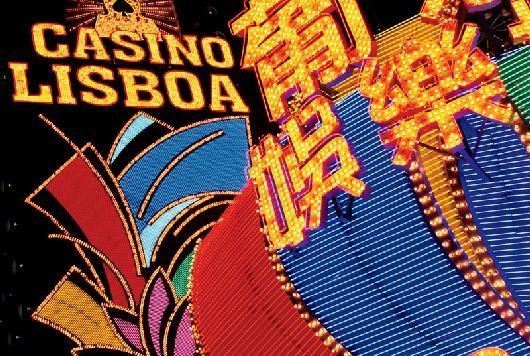
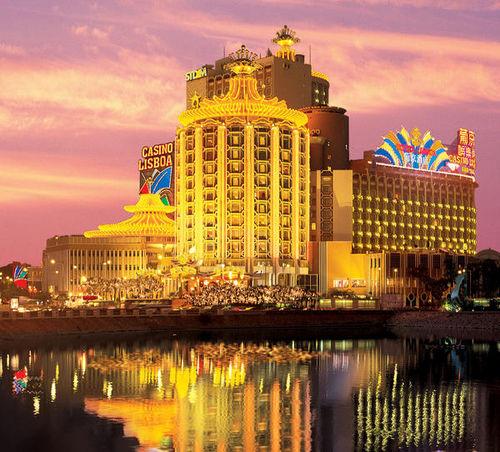
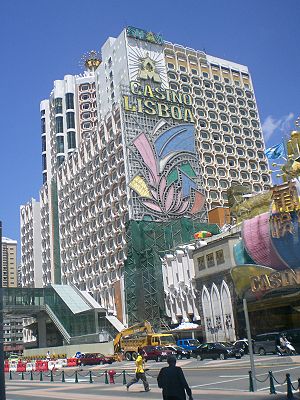
Casino
Lisboa
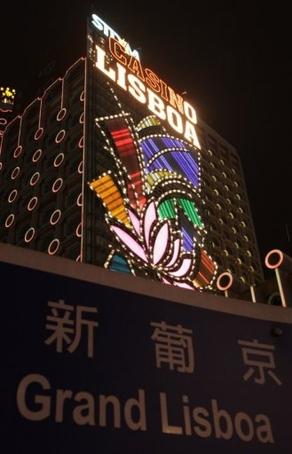
Media
Man Does Not Represent Casino Lisboa

Profiles
Asian
Gaming
Altira
Macau (formally Crown Macau)
City
Of Dreams

City
Of Dreams
The
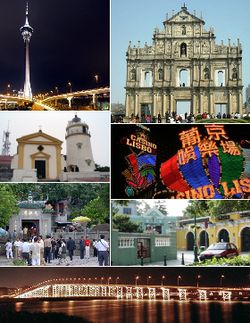
Macau Special Administrative Region, commonly known
as Macau or Macao , is one of the two special administrative
regions of the People's Republic of China, the other
being Hong Kong. Macau lies on the western side of
the Pearl River Delta, bordering Guangdong province
in the north and facing the South China Sea in the
east and south. The territory has thriving industries
such as textiles, electronics and toys, and a notable
tourist industry that boasts a wide range of hotels,
resorts, stadiums, restaurants and casinos.
Macau
was both the oldest and the last European colony in
China. Portuguese traders first settled in Macau in
the 16th century and subsequently administered the
region until the handover on December 20, 1999. The
Sino-Portuguese Joint Declaration and the Basic Law
of Macau stipulate that Macau operates with a high
degree of autonomy until at least 2049, fifty years
after the transfer. Under the policy of "one
country, two systems", the Central People's Government
is responsible for the territory's defence and foreign
affairs, while Macau maintains its own legal system,
police force, monetary system, customs policy, immigration
policy, and delegates to international organisations
and events.
Economy
of Macau
Macau's
economy is based largely on tourism, much of it geared
toward gambling. Other chief economic activities in
Macau are export-geared textile and garment manufacturing,
banking and other financial services. The clothing
industry has provided about three quarters of export
earnings, and the gaming, tourism and hospitality
industry is estimated to contribute more than 50%
of Macau's GDP, and 70% of Macau government revenue.
Macau
is a founding member of the WTO and has maintained
sound economic and trade relations with more than
120 countries and regions, with European Union and
Portuguese-speaking countries in particular; Macau
is also a member of the IMF.] World Bank classifies
Macau as a high income economy and the GDP per capita
of the region in 2006 was US$28,436. After the Handover
in 1999, there has been a rapid rise in the number
of mainland visitors due to China's easing of travel
restrictions. Together with the liberalization of
Macau's gaming industry in 2001 that induces significant
investment inflows, the average growth rate of the
economy between 2001 and 2006 is approximately 13.1%
annually.
In
a World Tourism Organization report of international
tourism statistics for 2006, Macau ranked 21st in
terms of tourist arrivals and 24th in terms of tourism
receipts. From 9.1 million visitors in 2000, arrivals
to Macau has grown to 18.7 million visitors in 2005
and 22 million visitors in 2006, with over 50% of
the arrivals coming from mainland China and another
30% from Hong Kong. Macau is expected to receive between
24 and 25 million visitors in 2007. Since the Handover,
Triad underworld violence, a deterring factor for
tourists, has virtually disappeared, to the benefit
of the tourism sector.
Starting
in 1962, the gambling industry had been operated under
a government-issued monopoly license by Stanley Ho's
Sociedade de Turismo e Diversões de Macau.
The monopoly ended in 2002, and several casino owners
from Las Vegas attempted to enter the market. With
the opening of the Sands Macau, the largest casino
in the world as measured by total number of table
games, in 2004 and Wynn Macau in 2006, gambling revenues
from Macau's casinos were for the first time greater
than those of Las Vegas Strip (each about $6 billion),
making Macau the highest-volume gambling centre in
the world. In 2007, Venetian Macau, the second largest
building in the world, opened its doors to the public,
followed by MGM Grand Macau. Numerous other hotel
casinos, including Galaxy Cotai Megaresort and Ponte
16, are also to be opened in near future.
In
2002, the Macau government ended the monopoly system
and six casino operating concessions and subconcessions
are granted to Sociedade de Turismo e Diversões
de Macau, Wynn Resorts, Las Vegas Sands, Galaxy Entertainment
Group, the partnership of MGM Mirage and Pansy Ho
Chiu-king, and the partnership of Melco and PBL. Today,
there are 16 casinos operated by the STDM, and they
are still crucial in the casino industry in Macau,
but in 2004, the opening of the Sands Macau ushered
in the new era.
Macau
is an offshore financial centre, a tax haven, and
a free port with no foreign exchange control regimes.
The offshore finance business is regulated and supervised
by the Monetary Authority of Macau, while the regulation
and supervision of the offshore non-finance business
is mainly controlled by the Macau Trade and Investment
Promotion Institute.In 2007, Moody's Investors Service
upgraded Macau's foreign and local currency government
issuer ratings to 'Aa3' from 'A1', citing its government's
solid finances as a large net creditor. The rating
agency also upgraded Macau's foreign currency bank
deposit ceiling to 'Aa3' from 'A1'.
As
prescribed by the Macau Basic Law, the government
follows the principle of keeping expenditure within
the limits of revenues in drawing up its budget, and
strive to achieve a fiscal balance, avoid deficits
and keep the budget commensurate with the growth rate
of its gross domestic product. All the financial revenues
of the Macau Special Administrative Region shall be
managed and controlled by the Region itself and shall
not be handed over to the Central People's Government.
The Central People's Government shall not levy any
taxes in the Macau Special Administrative Region.
(Credit:
Wikipedia).
News
Steve Wynn: Casino mogul moves on Macau
(Credit:
CNN - Talk Asia)
Steve
Wynn is a man who not only makes the preposterous
possible, but also profitable.
The casino mogul and billionaire turned Las Vegas
from a strip of gambling dens into a global attraction,
helping to foster the Vegas ideal that it is a place
consenting adults can see and do just about anything
imaginable (plus, of course, gamble 24-hours a day).
If
that happens to include watching erupting volcanoes
and full-size pirate ship battles, then you can thank
Steve Wynn personally; he opened The Mirage, complete
with 50-feet-tall volcano, in 1989 and Treasure Island
four years later. The Bellagio followed in 1998 with
an indoor lake, dancing fountains, high-end boutiques
and an art gallery.
A keen art collector himself, Wynn owns one of only
39 Vermeer paintings and hangs it in his office.
Glitz,
opulence and priceless pieces of art, however, are
a long way from where Wynn began.
He
was 20 when he inherited the family bingo parlor business
in Maryland. But it was an encounter with Frank Sinatra
in Las Vegas that made him want to move to the desert.
Invited
to a private performance by the late singer, Wynn
recalls in his interview with Anjali Rao: "There
they were, eight feet away and full of it. There was
no comparable thing today about the glamour of that.
And at that moment, I was hooked. I wanted to be a
part of the Las Vegas scene."
He
finally moved there with wife Elaine in 1967, starting
out as an executive and part owner of the Frontier
Hotel.
It
was after some shrewd moves in the property market
-- including selling on a lot bought from billionaire
recluse Howard Hughes for $1 million profit -- that
seven years later he became part of the scene at the
age of 32 when be bought the Golden Nugget.
After
becoming the youngest casino owner in the U.S. and
pioneering the big and brash revival Las Vegas in
the late 1980's, he has been quick to change tack
with his latest generation of mega-casinos where it's
less about things to see and more about an experience
- natural light, of all things, is a prominent feature,
in the Wynn Las Vegas that opened in 2005.
It's still on a grand scale, like the Wynn Macau his
latest venture, which is set to be followed by two
more casinos in the former-Portuguese colony. Wynn
hopes his Asian flagship will tap into China and the
regions expanding middle classes.
"The
pent-up demand for the good life in China is extraordinary,"
he told Anjali Rao.
|