|
David Bowie
Website
David
Bowie - BowieNet
Profiles
Music
Actors
Entertainment
Celebrities
News
David
Bowie tops albums chart for first time in 20 years
- 17th March 2013
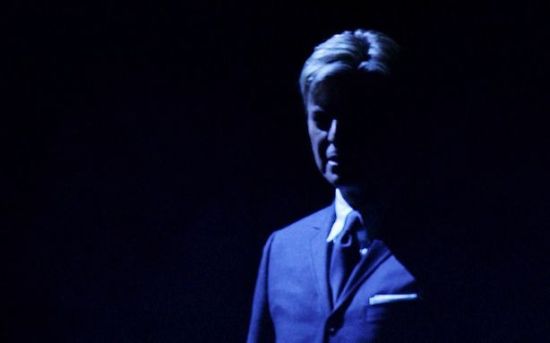
Bowie's new album The Next Day is UK's fastest-seller
of the year, as V&A exhibition also opens
David
Bowie's first album in a decade has become the fastest
selling of the year, hitting No 1 in its first week
of release.
The
Next Day is the singer's first No 1 since 1993's Black
Tie White Noise.
The
album sold 94,000 copies this week, according to the
Official Chart Company, outselling the number two
album from Bon Jovi two to one.
The
announcement of The Next Day took the world by surprise
in January, when Bowie released the single Where Are
We Now? and broke the news that he had also recorded
a full album. Those involved in its making had been
sworn to secrecy.
Writing
of the record in the Observer, Kitty Empire said "if
it is the mark of a satisfying album that you want
to absorb every last note and reference, then The
Next Day is a banquet".
The
album's appearance coincides with the start of David
Bowie is at the V&A museum in London, a retrospective
of the 66-year old's career and influence. Critic
Alexis Petridis said that "even when the exhibition
is covering well-trodden ground, it manages to dig
up stuff that's fresh and illuminating".
Bowie's
wife Iman also hinted last week that the singer may,
contrary to denials, soon head out on tour.
The
Next Day's first week sales beat that of the previous
fastest-selling UK album in 2013, Biffy Clyro's Opposites
which sold 71,600 in its first week on sale in January.
As well as Where Are We Now? it has also yielded the
single The Stars (Are Out Tonight).
Profile
David
Bowie (born David Robert Jones on 8 January 1947)
is an English Grammy Award-winning singer, songwriter,
multi-instrumentalist, producer, arranger and audio
engineer.
Active
in five decades of rock and roll, and frequently re-inventing
his music and image, Bowie is widely regarded as an
influential innovator, particularly for his work through
the 1970s. Bowie has taken cues from a wide range
of fine art, philosophy and literature.
He
is also a film and stage actor, music video director
and visual artist.
Career
overview
Although he released an album and numerous singles
earlier, David Bowie first caught the eye and ear
of the public in the autumn of 1969, when his space-age
mini-melodrama "Space Oddity" reached the
top five of the UK singles chart. After a three-year
period of experimentation he re-emerged in 1972 during
the glam-rock era as a flamboyant, androgynous alter
ego Ziggy Stardust, spearheaded by the hit single
"Starman" and the album The Rise and Fall
of Ziggy Stardust and the Spiders from Mars. The relatively
short-lived Ziggy persona epitomised a career often
marked by musical innovation, reinvention and striking
visual presentation.
In
1975 Bowie achieved his first major American crossover
success with the number-one single "Fame"
and the hit album Young Americans, which the singer
identified as “plastic soul”. The sound
constituted a radical shift in style that initially
alienated many of his UK devotees.
He
then confounded the expectations of both his record
label and his American audiences by recording the
minimalist album Low – the first of three collaborations
with Brian Eno. His most experimental works to date,
the so-called "Berlin Trilogy" nevertheless
produced three UK top-five albums. The anthem-like,
towering title track of the second work "Heroes"
(1977) is widely regarded as a milestone in rock and
pop.
After
uneven commercial success in the late 1970s, Bowie
had UK number ones with the 1980 single "Ashes
to Ashes" and its parent album, Scary Monsters
(and Super Creeps). He paired with Queen for the 1981
UK chart-topper "Under Pressure", but consolidated
his commercial – and, until then, most profitable
– sound in 1983 with the album Let's Dance, which
yielded the hit singles "China Girl", "Modern
Love" and, most famously, the title track.
Since
the mid-80s only a handful of Bowie’s recordings
have entered public consciousness. In the British
Broadcasting Corporation's 2002 poll of the 100 Greatest
Britons, Bowie ranked 29. Throughout his career he
has sold an estimated 136 million albums, and ranks
among the ten best-selling acts in UK pop history.
In
2004, Rolling Stone Magazine ranked him #39 on their
list of the 100 Greatest Artists of All Time.
Biography
1947
to 1967: Early years
David
Robert Jones was born in Brixton, London, to a father
from Yorkshire and a mother from an Irish-Catholic
family. He grew up at the address of 40 Stansfield
Road. He lived in Brixton until he was six years old,
when his family moved to Bromley in Kent (now part
of Greater London). He was educated at Bromley Technical
High School in Keston, Bromley and lived with his
parents until he was eighteen.
At
one point, Bowie's friend George Underwood, while
wearing a ring on his finger, punched him in the left
eye during a fight over a girl. He was forced to stay
out of school for eight months so that doctors could
conduct operations in attempts to repair his potentially
blinded eye.[3] Underwood and Bowie remained good
friends; Underwood went on to do artwork for Bowie's
earlier albums.[4] Doctors could not fully repair
the damage, leaving his pupil permanently dilated.
As a result of the injury, Bowie has faulty depth
perception. Bowie has stated that although he can
see with his injured eye, his colour vision was mostly
lost and a brownish tone is constantly present. The
color of the irises are still the same blue, but since
the pupil of the injured eye is wide open, the color
of his eyes are commonly confused to be differing.
At
the age of seventeen, David Jones was interviewed
on BBC television's Tonight programme by Cliff Michelmore
as the founder of The Society for the Prevention of
Cruelty to Long-haired Men.
Bowie
stated that his earliest musical goal was to be a
saxophone player in Little Richard's group. Initially
a saxophonist, he was discovered, quite by accident,
as a singer when he subbed in for a missing vocalist
at a club in London. He played with various blues
groups, such as The King Bees, The Mannish Boys and
The Lower Third in the 1960s. Bowie adapted his public
image to fit, and often anticipate, the prevailing
musical trends. His early work shifts through the
blues and Elvis-esque music while working with many
British pop styles.
Influenced
by the dramatic arts he studied at this age with Lindsay
Kemp — from avant-garde theatre and mime to Commedia
dell'arte — much of Bowie's work has involved
the creation of characters or personae to present
to the world. The aspiring rock star needed to use
a different stage name to avoid confusion with Davy
Jones of The Monkees, so he chose the last name Bowie
after the Alamo hero Jim Bowie and his famous Bowie
knife. He pronounces Bowie to rhyme with Joey.
Bowie
released his first solo album in 1967 for Deram records,
simply called David Bowie, an amalgam of psychedelia
and easy listening. Also released was a single, "The
Laughing Gnome", with the cult-classic B-side
"The Gospel According to Tony Day". None
of these managed to chart; the 1967 album is hard
to find today, although it exists in counterfeit copies.
However, the materials of the album, the single, and
several other works were later recycled in a multitude
of compilation albums.
During
1967, Bowie also had minor success with a single he
wrote for another artist, "Oscar" (an early
stage name of actor-musician Paul Nicholas). Bowie
wrote Oscar's third single, "Over The Wall We
Go", which gained a degree of notoriety because
it satirized a series of highly-publicized breakouts
from British prisons.
1969 to 1973: Psychedelic folk to glam rock
Bowie's first flirtation with fame came in 1969 with
his single "Space Oddity", supposedly released
to coincide with the first moon landing, although
Bowie himself has claimed that this is untrue. This
ballad was the story of what was often called Bowie's
first dual-subject and role, Major Tom, an astronaut
who becomes lost in space. It became a UK hit record.
Its corresponding album was originally titled David
Bowie and has caused some confusion, as both of Bowie's
first and second albums were released with that name
in the UK. In the US the second album bore the title
Man of Words, Man of Music. In 1972, the second album
was re-released as Space Oddity.
On
19 March 1970, Bowie married Mary Angela Barnett in
Kent, England. Later that year, Bowie released The
Man Who Sold the World, rejecting the acoustic guitar
sound of the previous album and replacing it with
the heavy rock backing provided by Mick Ronson, who
would be a major collaborator through to 1973. Much
of the album resembles British Heavy metal of the
period, but the album provided some interesting musical
detours, such as the title track's use of Latin sounds
to hold the melody.
The
track provided an unlikely hit for UK pop singer Lulu
and would be performed by many groups over the years,
including Nirvana. The cover of the first release
of this album, on which Bowie is seen reclining in
a dress, was an early indication of his interest in
exploiting his androgynous appearance.
His
next record, Hunky Dory (1971) saw the partial return
of the fey pop singer of "Space Oddity",
with light fare such as the droll "Kooks"
(dedicated to his young son known to the world as
Zowie Bowie). Other places, the album included some
of his most harrowing lyrics on tracks such as "Oh!
You Pretty Things" (this song was also taken
to UK #12 by Herman's Hermits' Peter Noone in 1971),
the semi-autobiographical "The Bewlay Brothers"
and the Buddhist-influenced "Quicksand".
Lyrically, the young songwriter also paid unusually
direct homage to his influences with "Song for
Bob Dylan", "Andy Warhol," and "Queen
Bitch," which Bowie's somewhat cryptic liner
notes indicate as a Velvet Underground pastiche.
As
with the single "Changes", Hunky Dory was
not a big hit but it laid the groundwork for the move
that would shortly lift Bowie into the first rank
of stars, giving him four top 10 albums and eight
top ten singles in the UK in 18 months between 1972
and 1973.
Bowie's
androgynous image was taken a step further in June
1972 with the seminal concept album The Rise and Fall
of Ziggy Stardust and the Spiders from Mars, focusing
on the career of an extraterrestrial rock singer.
The album's sound returns to the Heavy metal line-up
of The Man Who Sold the World, but the feel is lighter
and faster, typifying glam rock as pioneered by Marc
Bolan. Many of the album's songs became rock classics,
including "Ziggy Stardust," "Moonage
Daydream," "Hang on to Yourself," and
"Suffragette City".
Bowie's
Ziggy Stardust character became the basis for his
first tour beginning in 1972, where Bowie donned his
famous red, flaming hair and wild outfits. The tour
featured a three-piece band representing the 'Spiders
from Mars': Ronson on guitar, Trevor Bolder on bass,
and Mick Woodmansey on drums. The album flew to #5
in the UK on the strength of the #10 placing of the
single "Starman." The success of the album
made Bowie a star, and soon the one-year-old Hunky
Dory album eclipsed Ziggy Stardust, when it peaked
at #3 on the UK chart. At the same time the non-album
single "John, I’m Only Dancing" peaked
at UK #12, and "All the Young Dudes", a
song he had given to, and produced for, Mott the Hoople,
made UK #3.
Around
the same time Bowie began promoting and producing
his rock and roll heroes. Former Velvet Underground
singer Lou Reed's solo breakthrough Transformer was
produced by Bowie and Mick Ronson. Iggy Pop and his
band The Stooges signed with Bowie's management, MainMan
Productions, and recorded their ultimate album, Raw
Power, in London. Though he was not present for the
tracking of the album, Bowie later performed its much
debated mix.
The
Spiders From Mars came together again on 1973's Aladdin
Sane, another conceptual work about the disintegration
of society, and Bowie's first #1 album in the UK.
The album is sometimes called Bowie's "On the
Road" album, because he wrote all the new songs
on ship, bus or trains during the American Ziggy Stardust
tour. The album's cover, featuring Bowie shirtless
with Ziggy hair and a red, black, and blue lightning
bolt across his face, is impressive. Aladdin Sane
included the UK #2 hit "The Jean Genie",
the UK #3 hit "Drive-In Saturday", and a
rendition of The Rolling Stones' "Let's Spend
the Night Together". Mike Garson joined Bowie
to play piano on this album, and his performance has
been called the album's highlight[citation needed].
As of 2005, Garson often plays in Bowie's band.
Bowie's
later Ziggy shows, which included songs from both
the Ziggy Stardust and Aladdin Sane records as well
as a few earlier tracks like "Changes" and
"The Width of a Circle", were ultra-theatrical
affairs, filled with some rather shocking stage moments,
such as Bowie stripping down to a sumo wrestling loincloth
or simulating oral sex with Ronson's guitar. Bowie
took the character to extremes, touring and giving
press conferences as Ziggy before a dramatic and abrupt
on-stage "retirement" at London's Hammersmith
Odeon in 1973. His famous announcement - "Not
only is this the last show of the tour, but it's the
last show that we'll ever do" - was preserved
as part of a live recording of the show, released
as a double album under the title Ziggy Stardust -
The Motion Picture.
Pin
Ups, a collection of his versions of 1960s hits, was
released in 1973, spawning a UK #3 hit in "Sorrow"
and itself peaking at #1, making David Bowie the best-selling
act of 1973 in the UK. By that time, the Spiders from
Mars were long split, and Bowie was trying to escape
from his Ziggy persona. Bowie's own back catalogue
was now highly sought. The Man Who Sold the World
had been re-released in 1972 along with the second
David Bowie album (Space Oddity), whilst Hunky Dory's
"Life on Mars?" was released as a single
in 1973 and made #3 in the UK, the same year Bowie's
record from 1967, "The Laughing Gnome,"
hit #6.
The
androgynous public and stage persona Bowie affected
during this period sold records, but its popularity
in gay culture and the emerging gay rights movement
created controversy both in Britain, where homosexuality
had only been legal since 1967, and the United States.
1974 to 1976: Soul, R&B, and The Thin White Duke
1974 saw the release of another ambitious album, Diamond
Dogs, with a spoken word introduction and a multipart
song suite ("Sweet Thing/Candidate/Sweet Thing
(reprise)"). Diamond Dogs was the product of
two distinct ideas: a musical based on a wild future
in a post-apocalyptic city, and setting George Orwell's
1984 to music ("1984", "Big Brother",
"We Are the Dead").
Bowie
also made plans to develop a Diamond Dogs movie, but
didn't get very far. He mentioned later that there
was some footage completed with scenes of havoc with
people on roller skates, but it has remained unseen.
Bowie had planned on actually writing a musical to
1984, but his interest waned after encountering difficulties
in licensing the novel, and he used the songs he had
written for Diamond Dogs.
The
album — and an NBC television special, the 1980
Floor Show, broadcast at around the same time —
demonstrated Bowie headed toward the genre of soul/disco
music, the track "1984" being a prime example.
The album spawned the hits "Rebel Rebel"
(UK #5) and "Diamond Dogs" (UK #21), and
itself went to #1 in the UK, making him the best-selling
act of that country for the second year in a row.
In the US, Bowie achieved his first major commercial
success when the album went to #5.
To
follow on the release of the album, Bowie launched
a massive Diamond Dogs tour of North America, lasting
from June to December 1974. Choreographed by Toni
Basil, and lavishly produced with theatrical special
effects, the high-budget stage production broke with
contemporary standard practice for rock concerts by
featuring no encores. It was filmed by Alan Yentob
for the documentary Cracked Actor.
Bowie
commented that the resulting live album David Live
ought really to be called "David Bowie Is Alive
and Well and Living Only In Theory," presumably
referring to his addled psychological state during
this frenetic period. Nevertheless the album solidified
his status as a superstar, going #2 in the UK and
#8 in the US. It also spawned a UK #10 hit in a cover
of "Knock on Wood".
After
the opening leg of the tour, Bowie mostly jettisoned
the elaborate sets. Then, when the tour resumed after
a summer break in Philadelphia for recording new material,
the Diamond Dogs sound no longer seemed apt. Bowie
cancelled seven dates and made changes to the band,
which returned to the road in October as the Philly
Dogs tour.
For
Ziggy Stardust fans who had not discerned the soul
and funk strains already apparent in Bowie's recent
work, the "new" sound was considered a sudden
and jolting step. 1975's Young Americans was Bowie's
definitive exploration of Philly soul — though
he himself referred to the sound ironically as 'plastic
soul'. It contained his first #1 hit in the US, "Fame,"
co-written with John Lennon (who also contributed
backing vocals) and one of Bowie's new band members,
guitarist Carlos Alomar. It was based on a riff Alomar
developed when covering The Flares's 1961 doo-wop
classic "Footstompin'," which Bowie's band
had taken to playing live during the Philly Dogs period.
One of the backing vocalists on the album is a young
Luther Vandross, who also co-wrote some of the material
for Young Americans. The song Win featured a hypnotic
guitar riff later cribbed by Beck for the track/live
staple "Debra" off his Midnight Vultures
album. Despite Bowie's unashamed recognition of the
shallowness of his 'plastic soul,' he did earn the
bona fide of being one of the few white artists to
be invited to appear on the popular Soul Train. Another,
violently paranoid appearance on "The Dick Cavett
Show" seemed to confirm rumors of Bowie's heavy
cocaine use at this time.
Young
Americans was the album which cemented Bowie's stardom
in the US; though only peaking there at #9, as opposed
to the #5 placing of Diamond Dogs, the album stayed
in the charts for almost twice as long. At the same
time the album went #1 in the UK, and a re-issue of
his old single "Space Oddity" became his
first #1 hit in the UK, only a few months after "Fame"
had done the same in the US.
1976's
Station to Station featured a darker version of this
soul persona, called The Thin White Duke. Visually
the figure was an extension of Thomas Jerome Newton,
the character Bowie portrayed in The Man Who Fell
to Earth. Station to Station was a transitional album,
prefiguring the Krautrock and synthesizer music of
his next releases, while developing the funk and soul
music of Young Americans. By this time Bowie was heavily
dependent on drugs, especially cocaine, and many critics
have attributed the chopped rhythms and emotional
detachment of the record to the influence of the drug,
which Bowie claimed to have been introduced to in
America. His emotional disturbance and megalomania
at this time reached such a fever pitch that David
Bowie refused to relinquish control of a satellite,
booked for a world-wide broadcast of a live appearance
preceding the release of Station to Station, at the
request of the Spanish Government, who wished to put
out a live feed regarding the death of Spanish Dictator
Francisco Franco.
Nonetheless,
there was another large tour in 1976, the Station
to Station World Tour, which featured a starkly lit
set and highlighted new songs such as the dramatic,
lengthy title track, the romantic ballad "Word
on a Wing," and the funky "TVC 15"
and "Stay." The core band that coalesced
around this album and tour — rhythm guitarist
Alomar, bassist George Murray, and drummer Dennis
Davis — would remain a stable unit through 1980.
With
the album at #3 in the US, his greatest success there
ever, and the single "Golden Years" becoming
a transatlantic Top Ten hit, Bowie was at a commercial
peak, yet his sanity — by his own admission later
— was twisted by cocaine and he overdosed several
times during the year.
At
around this time, Bowie became embroiled in a controversy
caused by his comments to Playboy magazine apparently
praising Hitler, and his statement that "Britain
is ready for a fascist leader." He later pointed
out that being "ready" for one and "needing"
one are two different things. In a September 1976
Playboy interview, Bowie referred to Hitler as "one
of the first rock stars" and expressed admiration
of Hitler's stage presence, comparing him favourably
to Mick Jagger.
Bowie
may have intended to refer specifically and narrowly
to Hitler's ability to mesmerize a crowd, and not
to his Aryan-supremacist views or the genocidal results.
However, Bowie's statements were accompanied by some
theatrics involving an open-top vintage Mercedes and
what some claimed was a Nazi salute staged outside
Victoria Station.
Bowie
would later angrily deny being so "foolish"
as to raise a Nazi salute, claiming that the photographer
had caught him in mid-wave. This incident, along with
similarly controversial racist remarks by Eric Clapton
around the same time, were catalysts for the formation
of the Rock Against Racism movement. Later, Bowie
retracted his 'fascist' comments, excusing himself
by claiming his judgement had been affected by substance
abuse.
1976 to 1980: The Berlin era
Bowie's interest in the growing German music scene,
as well as his drug addiction, prompted him to move
to (West-)Berlin to dry out and rejuvenate his career.
Sharing an apartment in Schöneberg with his friend
Iggy Pop, he co-produced three more of his own classic
albums with Tony Visconti, as well as aiding Pop in
his career. With Bowie as a co-writer and musician,
Pop completed his first two solo albums, The Idiot
and Lust for Life.
More
unusually, Bowie joined Pop's touring band in the
spring, simply playing keyboard and singing backing
vocals. The group performed in the UK, Europe, and
the US from March to April.
The
brittle sound of Station to Station proved a precursor
to that found on Low, the first of three recorded
where Brian Eno was integral to the making of the
albums, but despite wide-spread belief, he was not
the producer. Journalists who do not read the album
covers often credit Eno with production of the trilogy
but in fact Bowie and Tony Visconti co-produced, with
Eno co-writing some of the music, playing keyboards
and developing strategies. Bowie stressed in 2000
"Over the years not enough credit has gone to
Tony Visconti on those particular albums. The actual
sound and texture, the feel of everything from the
drums to the way that my voice is recorded is Tony
Visconti."
Visconti
said at the time that "Bowie wanted to make an
album of music that was uncompromising and reflected
the way he felt. He said he did not care whether or
not he had another hit record, and that the recording
would be so out of the ordinary that it might never
get released."
Heavily
influenced by the Krautrock sound of Kraftwerk and
Neu and the minimalist work of Steve Reich, Bowie
journeyed to Neunkirchen near Cologne to meet the
famed German producer Conny Plank. Conrad Plank was
considered the revolutionary producer of that era
for German rock, but had no interest in working with
Bowie, refusing him entry into the studio. Bowie and
his team persevered, however, and recorded on their
own new songs that were relatively simple, repetitive
and stripped, a clear and perverse reaction to punk
rock, with the second side almost wholly instrumental.
(By way of tribute, proto-punk Nick Lowe recorded
an EP entitled "Bowi".) The album provided
him with a surprise #3 hit in the UK when the BBC
picked up the first single, "Sound and Vision",
as its 'coming attractions' theme music. Low was renowned
for having been far ahead of its time. Bowie himself
has said "cut me and I bleed Low". It was
produced in 1976 and released in early 1977.
The
Low sessions also formalised Bowie's three phase approach
to making albums that he still favours today. Much
of the band were present for the first five days only,
after which Eno, Alomar and Gardiner remained to play
overdubs. By the time Bowie wrote and recorded the
lyrics everybody but Visconti and studio engineers
had departed.
The
next record, "Heroes", was similar in sound
to Low, though slightly more accessible. The mood
of these records fit the zeitgeist of the Cold War,
symbolized by the divided city that provided its inspiration.
The title track remains one of Bowie's best known,
a classic story about two lovers who met at the Berlin
Wall.
Also
in 1977, Bowie appeared on the ITV music show Marc,
hosted by his friend and fellow glam pioneer Marc
Bolan of T. Rex, with whom he had regularly socialised
and jammed since before either became famous. He turned
out to be the show's final guest, as Bolan was killed
in a car crash shortly afterwards. Bowie was one of
many superstars who attended the funeral.
For
Christmas 1977, Bowie joined Bing Crosby, of whom
he was an ardent admirer, in a recording studio to
do a version of Little Drummer Boy, with new lyrics
added. The two had originally met on Crosby's Christmas
television special two years earlier (on the recommendation
of his children — Crosby had not heard of Bowie)
and performed the song. One month after the record
was completed, Crosby died. Five years later, the
song would prove a worldwide festive hit, charting
in the U.K at #3 on Christmas Day 1982. Bowie later
remarked jokingly that he was afraid of being a guest
artist, because "everyone I met dropped dead
a month later", referring to Bolan and Crosby.
There
was an extensive world tour in 1978 which featured
the music of both Low and "Heroes". A live
album of this tour was released, known as Stage. Songs
from both Low and "Heroes" were later converted
to symphonies by minimalist composer Phillip Glass.
1978 was also the year that featured Bowie narrating
Sergei Prokofiev's Peter and the Wolf, which to this
day is regarded as one of the best recordings of the
work.
Lodger
(1979) was the final album in Bowie's so-called "Berlin
Trilogy" or 'triptych' as Tony Visconti says
Bowie called it. It featured the singles "Boys
Keep Swinging", "DJ" and "Look
Back in Anger" and, unlike the two previous long-players,
did not contain any instrumentals. However, the album
is renowned for being quite a contorted mix of New
Wave and world music, and pieces such as "African
Night Flight" and "Yassassin" were
surprising detours even by Bowie's standards. However,
it contained tracks that were composed using the non-traditional
Bowie/Eno composition techniques. "Boys Keep
Swinging" was developed with the band members
swapping their instruments with each other and "Move
On" contains the chords for an early Bowie composition
"All The Young Dudes", however they are
played backwards. This was Bowie's last album with
Eno until 1995's Outside.
In
1980, Bowie did an about-face, integrating the lessons
learnt on Low, Heroes, and Lodger while expanding
upon them with chart success. Scary Monsters (and
Super Creeps) included the #1 hit "Ashes to Ashes",
featuring the textural work of guitar-synthesist Chuck
Hammer, and revisiting the character of Major Tom
from "Space Oddity". The imagery Bowie used
in the song's music video gave international exposure
to the underground New Romantic movement and, with
many of the followers of this phase being devotees,
Bowie visited the London club "Blitz"—the
main New Romantic hangout—to recruit several
of the regulars (including Steve Strange of the band
Visage) to act in the video, renowned as being one
of the most innovative of all time.
While
Scary Monsters utilised principles that Bowie had
learned in the Berlin era, it was considered by critics
to be far more direct musically and lyrically, possibly
reflecting the brutal transformation Bowie had gone
through during the experience. Bowie had divorced
his wife Angie, undergone withdrawal from the drugs
of the "Thin White Duke" era, and his conception
of how music should be written had totally changed.
The album had a hard rock edge with many innovations,
including conspicuous guitar contributions from King
Crimson's Robert Fripp and The Who's Pete Townshend.
Perhaps in an appropriate creative high point, as
"Ashes to Ashes" hit #1 on the UK charts,
Bowie opened a 3-month run on Broadway starring as
The Elephant Man on 23 September 1980.
References:
^
David Bowie by Stephen Thomas Erlewine; URL accessed
March 21, 2007
^ The Immortals: The First Fifty. Rolling Stone Issue
946. Rolling Stone.
^ Gillman, Peter; Leni Gillman. Alias David Bowie,
85. ISBN 0-450-413468.
^ album covers David Bowie Album Covers. GeorgeUnderwood.com.
^ Rock Movers & Shakers, Dafydd Rees and Luke
Crampton, 1991 Billboard Books.
1980 to 1989: Bowie the superstar
In 1981, Queen released "Under Pressure",
co-written by and performed with Bowie. The song was
a hit and became Bowie's 3rd and Queen's 2nd #1 single.
In the same year Bowie made a cameo appearance in
the German movie Christiane F. Wir Kinder vom Bahnhof
Zoo, the real-life story of a 13 year-old girl in
Berlin who becomes addicted to heroin and ends up
prostituting herself. Bowie is credited with "special
cooperation" in the credits and his music features
prominently in the movie. The soundtrack was released
in 1982 and contained a version of "Heroes"
sung partially in German.
Bowie
then scored his first truly commercial blockbuster
with Let's Dance in 1983, a slick dance album co-produced
by CHIC's Nile Rodgers. It was a departure from Scary
Monsters for which Bowie received a bit of inside
criticism; rather than revolting against 1980s dance
music, he had in fact joined the scene. The title
track went to #1 in the United States and United Kingdom
and many now consider it a standard.
The
album also featured the singles "Cat People",
"Modern Love" and "China Girl"
, the latter causing something of a stir due to its
suggestive promotional video. "China Girl"
was a remake of a song which Bowie co-wrote several
years earlier with Iggy Pop, who recorded it for The
Idiot. In an interview by Kurt Loder, Bowie revealed
that the motivation for recording China Girl was to
help out his friend Iggy Pop financially, contributing
to Bowie's history of support for musicians he admired.
Let's Dance was also notable as a stepping stone for
the career of the late Texan guitarist Stevie Ray
Vaughan, who played on the album and was to have supported
Bowie on the consequent Serious Moonlight Tour. Vaughan,
however, never joined the tour after a pay dispute
between Bowie and Vaughan's manager at the time. Vaughan
was replaced by Earl Slick. The Simms Brothers Band
toured and performed with Bowie at this time. The
tour was a huge success, and a single performance
at the US festival actually scored Bowie a million
dollars on its own.
The
1984 follow-up album Tonight was also dance-oriented,
featuring collaborations with Tina Turner and a cover
of The Beach Boys' "God Only Knows". Critics
labeled it a lazy effort, dashed off by Bowie simply
to recapture Let's Dance's chart success. Yet the
album bore the transatlantic Top Ten hit "Blue
Jean" whose complete video, a 22-minute short
film directed by Julien Temple, reflected Bowie's
long-standing interest in combining music with drama.
This video would win Bowie his only Grammy to date,
for Best Short-Form Music Video. It also featured
the minor hit "Loving the Alien". The album
also has a pair of dance version rewrites of "Neighborhood
Threat" and "Tonight", old songs Bowie
wrote with Iggy Pop which had originally appeared
on Lust for Life.
In
1985, Bowie performed several of his greatest hits
at Wembley for Live Aid. At the end of his set, which
comprised "Rebel Rebel", "TVC 15",
"Modern Love" and "'Heroes'",
he introduced a film of the Ethiopian famine, for
which the event was raising funds, which was set to
the song "Drive" by the Cars. At the event,
the video to a fundraising single was premièred
– Bowie performing a duet with Mick Jagger on
a version of "Dancing in the Street", which
quickly went to #1 on release.
David Bowie as the Goblin King JarethAlso, Bowie worked
with the Pat Metheny Group on the song "This
Is Not America", which was featured in the film
The Falcon and the Snowman. This song was the centrepiece
of the album, a collaboration intended to underline
the espionage thriller's central themes of alienation
and disaffection.
In
1986 Bowie contributed the theme song to the film
Absolute Beginners. The movie was not well reviewed
but Bowie maintained for many years that the song,
a UK #2 hit, was one of the best and most professional
he'd ever written. He also took a role in the 1986
Jim Henson film Labyrinth as Jareth, the Goblin King,
who steals the baby brother of a girl named Sarah
(played by Jennifer Connelly), in order to turn him
into a goblin. Bowie wrote songs for the film, some
of which became singles.
Bowie's
final dance album was Never Let Me Down (1987), where
he ditched the light dance of his two earlier albums,
instead producing harder rock with a dance edge. The
album, which 'only' scraped to a UK #6 peak, drew
some of the harshest criticism of Bowie's career,
condemned by critics as a faceless piece of product
and ignored by the public — Bowie himself openly
apologized in an interview for the album's quality;
defenders of the album maintain that many of its songs
are underrated and that Bowie at this time was simply
facing the inevitable backlash of an overexposed superstar.
Opening
on 30 May 1987, the Glass Spider Tour sought to market
the album; visiting fifteen countries and produced
eighty-six performances, as well as nine promotional
press shows. Musicians included: Carlos Alomar (guitar),
Peter Frampton (lead guitar), Carmine Rojas (bass),
Alan Childs (drums), Erdal Kizilcay (keyboards, trumpet,
congas, violin) and Richard Cottle (keyboards, saxophone).
Dancers included: Melissa Hurley, Viktor Manoel, Constance
Marie, Craig Allen Rothwell (aka Spazz Attack), and
Stephen Nichols.
Some
critics called it overproduced and claimed that it
was pandering to then-current stadium rock trends
in its special effects and dancers. However, fans
that saw the shows from the Glass Spider Tour were
treated to many of Bowie's classics. In August of
1988, Bowie portrayed Pontius Pilate in the Martin
Scorsese film The Last Temptation of Christ.
1989 to 1991: Tin Machine
In 1989, for the first time since the early 1970s,
Bowie formed a regular band, Tin Machine, a hard-rocking
quartet, along with Reeves Gabrels, Tony Sales, and
Hunt Sales. Tin Machine released two studio albums
and a live record. The band received mixed reviews
and a somewhat lukewarm reception from the public,
but Tin Machine heralded the beginning of an ongoing
collaboration between Bowie and Gabrels.
The
original album, Tin Machine (1989), was a success,
holding the number three spot on the charts of the
UK. Tin Machine launched its first world tour, featuring
a now unshaven David Bowie, that year. Despite the
success of the Tin Machine venture, Bowie was mildly
frustrated that many of his ideas were either rejected
or changed by the band.
Bowie
began the 1990s with a stadium tour, in which he played
mostly his biggest hits. The "Sound + Vision
Tour" (named after the Low single) was conceived
and directed by choreographer Edouard Lock of the
Québécois contemporary dance troupe
La La La Human Steps, who Bowie collaborated and performed
with on stage and in his videos. The tour drew large
crowds, perhaps in part because he had declared that
this would be the last time he would play the hits.
Though
he surprised no one when he later reneged on that
promise and also on the promise that his set in each
country would be focused on the favourite hits voted
by phone poll in that country ... an idea quickly
jettisoned when a puckish campaign by the British
magazine NME resulted in a landslide in favour of
The Laughing Gnome!, it is true that his later tours
generally featured few of those hits, and when they
appeared, they were often radically reworked in their
arrangement and delivery.
Bowie's
negative press-image continued when the cover of Tin
Machine's second album became unusually controversial,
due to the presence of naked statues as its cover
art. The coverage only seemed to invite unrelated
negative commentary about Bowie to further permeate
the public discourse.
After
the less successful second album Tin Machine II and
the complete failure of live album Tin Machine Live:
Oy Vey, Baby, Bowie tired of having to work in a group
setting where his creativity was limited, and finally
disbanded Tin Machine to work on his own. But the
Tin Machine venture did show that Bowie had learned
some harsh lessons from the previous decade, and was
determined to get serious about concentrating on music
more than commercial success. In retrospect, music
critics have found that Tin Machine's music, both
stylistically and melodically, had many similarities
to that of the grunge phenomenon which hit with Nirvana
in 1991. Songwriter Kurt Cobain's journals confirmed
his fondness for both Bowie and the short-lived band.
1992 to 1999: Electronica
In 1992 he performed his hit "Heroes" and
"Under Pressure" (with Annie Lennox) at
the Freddie Mercury Tribute Concert. 1993 saw the
release of the soul, jazz and hip-hop influenced Black
Tie White Noise, which reunited Bowie with Let's Dance
producer Nile Rodgers. Though considered by some critics
to be musically far superior to Let's Dance, the public
was still unsure whether or not it was ready to be
receptive of Bowie again. The album, however, met
the number one spot on the UK charts with singles
such as "Jump They Say" and "Miracle
Goodnight". However, until re-released later
in the 1990s, the album was extraordinarily rare after
the fledgling Savage Records on which it had been
released suddenly went belly-up[citation needed].
The album is often considered Bowie's oddest departure.
Undaunted,
Bowie explored new directions on albums such as 1993's
The Buddha of Suburbia (built on incidental music
composed for a TV series). The album still contained
some of the new elements introduced in Black Tie White
Noise, except with more of a twist in the direction
of alternative rock. The album's odd success later
led to a 1994 re-release in the United States, and
Bowie hails it as being an album of entirely his own,
original, and newly created work.
1995's
ambitious, quasi-industrial Outside, supposed to be
the first volume in a subsequently abandoned non-linear
narrative of art and murder, reunited him with Brian
Eno. The album introduced the characters of one of
Bowie's short stories, and was quite an interesting
success. The album put Bowie back into the mainstream
scene of rock music with its singles such as "Hallo
Spaceboy" and "The Hearts Filthy Lesson,"
the latter featured in the closing credits of the
movie Se7en.
In
September of 1995 Bowie began the Outside Tour with
Gabrels again joining Bowie as his live band's guitarist.
In a move that was equally lauded and ridiculed by
Bowie fans and critics, Bowie chose Trent Reznor's
Nine Inch Nails as the tour partner. NIN & Bowie
toured as a co-headlining act. Although initially
successful, the tour was cancelled early due to poor
sales. However, Reznor has gone on record numerous
times as being heavily influenced by Bowie, and further
collaborated with him by remixing "The Heart's
Filthy Lesson".
On
17 January 1996 David Bowie was inducted into the
Rock and Roll Hall of Fame at the eleventh annual
induction ceremony.
Receiving
some of the strongest critical response since Let's
Dance was 1997's Earthling, which incorporated experiments
in British jungle and drum and bass and included a
single released over the Internet, called "Telling
Lies." There was ultra-sustained energy in this
album, along with lesser experiments in techno drum
rhythms, while still holding to Bowie's own musical
concepts.
Singles
such as "Little Wonder" were the forefront
of the album. There was a corresponding world tour,
which was fairly successful. Bowie's track in the
Paul Verhoeven film Showgirls, "I'm Afraid of
Americans" was remixed by Trent Reznor for a
single release. The video's heavy rotation (also featuring
Reznor) contributed to Bowie's newfound relevancy
in the late 1990s and his overall image restoration.
On
9 January 1997, Bowie played a concert at Madison
Square Garden to celebrate his 50th birthday (although
his birthday was the previous day). Guest performers
included Billy Corgan, Frank Black, Sonic Youth, Robert
Smith of The Cure, Brian Molko, and Lou Reed whose
1972 album Transformer Bowie co-produced.
The
1998 Todd Haynes film Velvet Goldmine drew its title
from a Ziggy-era Bowie song and contained many events
paralleling Bowie's life on and off stage; the relationship
between the two main characters, Curt Wild (played
by Ewan McGregor) and Brian Slade (played by Jonathan
Rhys-Meyers) was loosely based on that of Iggy Pop
and David Bowie during the 1970s. The tagline "The
rise of a star ... the fall of a legend" obviously
recalls the name "The Rise and Fall of Ziggy
Stardust", and the film contains numerous references
to Bowie's career.
In
an interview with the band Placebo, Bowie noted that
he liked the story, but the movie felt more like the
early 1980s than the early 1970s. He did not permit
his own songs to be used in the film when requested,
and soon he combated it in a lengthy court case, where
Bowie sued to try to stop the film's release due to
his offence at the depiction of the Slade character
as being vile and opportunistic.
The
1990s also saw Bowie launch a branded internet service
provider (BowieNet) as well as a novel and quite successful
fund-raising scheme to raise cash on the strength
of future royalties, called Bowie Bonds.
1999 to present: Neoclassicist Bowie
In 1998, David Bowie had reunited with Tony Visconti
to record a song for The Rugrats Movie called "Sky
Life". Although the track was edited out of the
final cut, and did not feature on the film's soundtrack
album, the reunion led to the pair pursuing a new
collaborative effort.[citation needed]
1999
found Bowie composing the soundtrack for a computer
game called "Omikron: The Nomad Soul." David
Bowie and his wife, Iman, made appearances as characters
in the game. That same year, re-recorded tracks from
the game and new music was released in the album 'hours...'
featured "What's Really Happening", the
lyrics for which were written by Alex Grant, the winner
of Bowie's "Cyber Song Contest" Internet
competition. This album presented Bowie's exit from
heavy electronica, with an emphasis on more live instruments,
and, through songs like "Thursday's Child"
and "Survive," a thematic move into Bowie's
sense of his own aging and sentimentalism. After this
album, Bowie's guitarist, Reeves Gabrels, quit working
with Bowie, feeling that the music was becoming "too
soft."
Plans
surfaced after the release of 'hours...' for an album
titled Toy, which would feature new versions of some
of Bowie's earliest pieces as well as three new songs.
Sessions for the album commenced in 2000, but the
album was never released, leaving a number of tracks,
some as-of-yet unheard, on the editing floor.
Bowie
and Visconti continued collaboration with the production
of a new album of completely original songs instead.
The result of the sessions was the 2002 album Heathen,
notable for its dark and atmospheric sound, and Bowie's
largest chart success in recent years. It also included
a cover of the Pixies song "Cactus", which
was another offshoot of Bowie's consistent interest
in the band. Singles for "Slow Burn," "I've
Been Waiting for You," and "Everyone Says
'Hi'" were released along with numerous B-sides
featuring pieces from the Toy sessions and "Safe,"
a reworking of "Sky Life." The songs "Afraid"
and "Uncle Floyd" (retitled "Slip Away")
from Toy were also released as album tracks as songs
reminiscent of an earlier style.
In
2003, a report in the Sunday Express named Bowie as
the second-richest entertainer in the UK (behind Sir
Paul McCartney), with an estimated fortune of £510
million. However, the 2005 Sunday Times Rich List
credited him with a little over £100 million.
In
September 2003, Bowie released a new album, Reality,
and announced a world tour. 'A Reality Tour' was the
best-selling tour of the following year. However,
it was cut short after Bowie suffered chest pain while
performing on stage in the northwestern German town
of Scheeßel on 25 June 2004. Originally thought
to be a pinched nerve in his shoulder, the pain was
later diagnosed as an acutely blocked artery; an emergency
angioplasty was performed at St. Georg Hospital in
Hamburg by Dr. Karl Heinz Kuck.
He
was released in early July and continued to spend
time recovering. Bowie later admitted he had suffered
a minor heart attack, resulting from years of heavy
smoking and touring. The tour was cancelled for the
time being, with hopes that he would go back on tour
by August, though this did not materialise. He recuperated
back in New York City.[10] Bowie released a live DVD
of the tour, entitled A Reality Tour in October 2004,
which included songs spanning the full length of Bowie's
career, although mostly focusing on his more recent
albums.
During
the tour, Bowie had been hit in the eye with a lollipop
stick while performing in Oslo, Norway. Bowie was
purported to have stopped the concert and to have
yelled "Wanker! You fucking wanker!" at
the lollipop thrower. He later resumed the concert
and apologised to the crowd for his response.
Still
recuperating from his operation, Bowie worked off-stage
and relaxed from studio work for the first time in
several years. In 2004, a duet of his classic song
"Changes" with Butterfly Boucher appeared
in Shrek 2. The soundtrack for the film The Life Aquatic
with Steve Zissou featured David Bowie songs performed
in Portuguese by cast member Seu Jorge (who adapted
some lyrics to make them relevant to the film's story).
Most of the David Bowie songs featured in the film
were originally from David Bowie (Deram), Space Oddity,
Hunky Dory, The Rise and Fall of Ziggy Stardust and
the Spiders from Mars and Diamond Dogs. Bowie commented,
"Had Seu Jorge not recorded my songs acoustically
in Portuguese I would never have heard this new level
of beauty which he has imbued them with".
Despite
hopes for a comeback, in 2005 David Bowie announced
that he had made no plans for any performances during
the year. After a relatively quiet year, Bowie recorded
the vocals for the song "(She Can) Do That",
co-written by Brian Transeau, for the movie Stealth.
Rumours flew about the possibility of a new album,
but no announcements were made. In April 2005, film
writer and director Darren Aronofsky revealed Bowie
was working on a rock opera adaptation of the comic
book Watchmen.
David
Bowie finally returned to the stage on 8 September
2005, alongside Arcade Fire, for the nationally televised
event Fashion Rocks, his first gig since the heart
attack. Bowie has shown interest in the Montreal band
since he was seen at one of their shows in New York
City nearly a year earlier. Bowie had requested the
band to perform at the show, and together they performed
the Arcade Fire's song "Wake Up" from their
album Funeral, as well as Bowie's own "Five Years".
He joined them again on 15 September 2005, singing
"Queen Bitch" and "Wake Up" from
Central Park's Summerstage as part of the CMJ Music
Marathon.
Bowie
contributed back-up vocals for TV on the Radio's song
"Province" from their album Return to Cookie
Mountain.[14] He made other occasional appearances,
as in his commercial with Snoop Dogg for XM Satellite
Radio. He appeared on Danish alt-rockers Kashmir's
2005 release, No Balance Palace, which was produced
by Tony Visconti. The album also featured a spoken
word performance by Lou Reed, making it the second
project involving both Bowie and Reed in two years,
since Reed's 2003 The Raven.
On
8 February 2006, David Bowie was awarded the Grammy
Lifetime Achievement Award. In November, Bowie performed
at the Black Ball in New York for the Keep a Child
Alive Foundation alongside his wife, Iman, and Alicia
Keys. He duetted with Keys on "Changes",
and also performed "Wild is the Wind" and
"Fantastic Voyage".
For
2006, Bowie once again announced a break from performance,
but he made a surprise guest appearance at David Gilmour's
29 May 2006 concert at the Royal Albert Hall in London.
He sang on "Arnold Layne" and "Comfortably
Numb", closing the concert. The former performance
was released, on 26 December, as a single.
It
was announced that in May 2007 Bowie would curate
the Highline Festival in the abandoned railway park
in New York called the Highline were he would select
various musicians and artists to perform.
Acting
career
Bowie's
first major film role in The Man Who Fell to Earth
(1976) earned acclaim. David's character Newton is
an alien from a planet that is dying from a lack of
water. He comes to Earth to ship some of our large
supply back to his homeworld. Thanks to his advanced
knowledge he can get patents for a number of new inventions.
However, his rise to power seems to change him and
as despair and alcohol consume him, his mission seems
to have come in jeopardy. In Just a Gigolo (1979),
an Anglo-German co-production directed by David Hemmings,
Bowie played the lead role of a Prussian officer returning
from World War I who is discovered by a Baroness (Marlene
Dietrich) and put into her Gigolo Stable.
In
the eighties Bowie continued to play several roles
in excellent films. In 1981, he guest starred the
cripple, but flamboyant and optimistic neighbor on
the British soap opera, "Lives...of the Curious."
In 1982 he made a cameo appearance as himself in Christiane
F., a dark movie about drug addiction. Bowie also
starred in The Hunger (1983), a revisionist vampire
movie with Catherine Deneuve and Susan Sarandon. In
the film, Bowie and Deneuve are vampire lovers, with
her having made him a vampire centuries ago. But while
she is truly ageless, he discovers to his horror that
while he is immortal, he can still age, and rapidly
becomes a pathetic, monstrous husk as the film progresses.
Nagisa Oshima's film Merry Christmas, Mr. Lawrence
(1983) was based on Laurens van der Post's novel The
Seed and the Sower. Bowie played Major Jack Celliers,
a prisoner of war in a Japanese internment camp; another
famous musician, Ryuichi Sakamoto, played the camp
commandant. Bowie had a cameo as The Shark in Yellowbeard,
a 1983 pirate comedy made by some of the members of
Monty Python, and a small part as a hit-man in the
1985 film Into the Night. Merry Christmas, Mr. Lawrence
impressed some critics but his next serious project,
the rock musical Absolute Beginners (1986), was both
a critical and box office disappointment. The same
year he appeared in the Jim Henson cult classic, the
dark fantasy Labyrinth (1986), playing Jareth, the
king of the goblins. Jareth is a powerful, mysterious
creature who has an antagonistic yet strangely flirtatious
relationship with Sarah (Jennifer Connelly), the film's
teenage heroine. Appearing in heavy make-up and a
mane-like wig, Bowie sings a variety of new songs
specially composed for the film's soundtrack. Bowie
also played a sympathetic Pontius Pilate in Martin
Scorsese's The Last Temptation of Christ (1988). He
was briefly considered for the role of The Joker by
Tim Burton and Sam Hamm for 1989's Batman. Hamm recalls
"David Bowie would be kind of neat because he's
very funny when he does sinister roles." The
role ended up going to Jack Nicholson.
The
nineties were a bit less interesting for David Bowie.
He portrayed a disgruntled restaurant employee opposite
Rosanna Arquette in The Linguini Incident, and played
mysterious FBI agent Phillip Jeffries in David Lynch's
Twin Peaks: Fire Walk With Me (1992). He portrayed
Andy Warhol in Basquiat – artist/director Julian
Schnabel's 1996 biopic of the artist Jean-Michel Basquiat.
Bowie also appeared in The Hunger, a TV horror serial
based on the 1983 movie. He played the title role
in Mr. Rice's Secret (2000) in which he is the neighbour
of a terminally ill twelve year old. Shortly after
Mr Rice dies, the boy discovers that Mr. Rice has
planned a special treasure hunt which will lead to
an important secret.
In
2001, Bowie appeared as himself in the film Zoolander,
volunteering himself to be a walkoff judge between
Ben Stiller's character Zoolander, and Owen Wilson's
character Hansel. The film, a comedy and pseudomockumentary,
pays homage to Bowie's legacy as a fashion pioneer
in allowing him this role. Bowie portrayed Nikola
Tesla alongside Christian Bale and Hugh Jackman in
The Prestige (2006), directed by Christopher Nolan.
It follows the bitter competition between two magicians
around the turn of the century. Bowie has voice-acted
in the new movie Arthur and the Minimoys (or Arthur
And The Invisibles in the US); his role in the film
is the villain, Maltazard. He appeared as himself
and wrote and performed a song mocking the main character
in a 2006 episode of Extras. He will lend his voice
to a character in the upcoming SpongeBob SquarePants
episode "Lord Royal Highness".
Further
information: David Bowie filmography
Personal life
Bowie met his first wife Angela (known as Angie) in
1969. According to David, they met when they were
both "fucking the same bloke" (Record executive
Calvin Mark Lee).[17] She is credited by some as being
one of David's biggest influences in his early career
and rise to fame, though David has later tried to
play down her importance. They married one year later
on 19 March 1970 at Bromley Registry Office in Beckenham
Lane, Kent, England where she permanently took his
adopted last name. They had a son (born on 30 May
1971) whom they named Zowie (Zowie later preferred
to be known as Joe/Joey, although now he has reverted
to his legal birth name - "Duncan Zowie Heywood
Jones"). They separated after eight years of
marriage and divorced on 8 February 1980, in Switzerland.
Angie later cited it as "a marriage of convenience"
for both.
In
a 1976 interview with Playboy Magazine, Bowie said,
"It's true - I am a bisexual. But I can't deny
that I've used that fact very well. I suppose it's
the best thing that ever happened to me." He
distanced himself from that in a 1983 interview with
Rolling Stone, and expressed a more nuanced view in
a 2002 interview with Blender: "I had no problem
with people knowing I was bisexual. But I had no inclination
to hold any banners or be a representative of any
group of people. I knew what I wanted to be, which
was a songwriter and a performer, and I felt that
bisexuality became my headline over here for so long.
America is a very puritanical place, and I think it
stood in the way of so much I wanted to do."
Bowie
married his second wife, the Somali-born model Iman
Abdulmajid, in 1992. The couple have a daughter, Alexandria
Zahra Jones (known as Lexi). He also has a stepdaughter
by Iman's first marriage. The couple make their home
in Manhattan.
[edit] References in popular culture
David Bowie in The Venture Bros.In the Gilmore Girls
episode "Eight O' Clock at the Oasis", Lorelai
gets invited to a David Bowie concert
Bowie's songs are featured (sung in Portuguese by
cast member Seu Jorge with some slightly altered lyrics
to fit the themes of the film) in the Wes Anderson
movie The Life Aquatic with Steve Zissou.
Bowie is referenced numerous times in the Adult Swim
animated series The Venture Bros.:
In the episode "Ghosts of the Sargasso",
the opening tells of a test pilot named Major Tom.
When he communicates to mission control during a flight,
the dialogue is taken verbatim from "Space Oddity"
and "Ashes to Ashes". The plane Major Tom
is flying is "TVC 15", a title of another
Bowie song.
In "The Incredible Mr. Brisby", the episode's
eponymic villain has a panda as a companion (companda)
that he won from David Bowie in a trivia contest.
Bowie later hires Molotov Cocktease to kill Brisby
and regain the Panda for him, a mission in which she
succeeds.
The two-part second season finale, "Showdown
at Cremation Creek", gives Bowie a vital role
in the plot. He makes an unofficial appearance (voiced
by James Urbaniak) at the wedding between The Monarch
and Dr. Girlfriend, giving Dr. Girlfriend away. It
is revealed later that he is the Sovereign, leader
of the Guild of Calamitous Intent and an enigmatic
figure that had appeared in the shadows earlier in
the season. Bowie apparently has shapeshifting powers
in the show, which he uses to defeat his former henchmen
Iggy Pop, Klaus Nomi and seriously injure his former
employee Phantom Limb to rescue Dr. Girlfriend. He
also seems to possess an invulnerability to Phantom
limb's Touch of Death.
Bowie is also the subject of a Phish song bearing
his name, found on the Junta album.
Strong Sad dresses as Bowie, specifically referencing
the Aladdin Sane album cover, in the 2004 Homestar
Runner Halloween Special.
Bowie's song "Ziggy Stardust" was featured
in the PS2 game Guitar Hero, developed by Harmonix.
A remix of "Everyone Says 'Hi'" was also
featured on the earlier game, Amplitude, by the same
developers.
Bowie recently announced that he will be a special
guest on a future episode of SpongeBob SquarePants
in 2007.
Bowie was featured in the red carpet scene near the
beginning of the Stewie Griffin movie.
In the mid-1990s Rolling Stone magazine likened Argentine
Rock en Español legend Gustavo Cerati, then
lead singer of band Soda Stereo , to a Spanish-speaking
version of David Bowie.[citation needed]
Similarly, the late Katsuhiko Nakagawa, musician and
father of model Shouko Nakagawa, was often referred
to as "the Japanese David Bowie".
Bowie is featured in a song (named "Bowie")
by New Zealand based folk/comedy band, The Flight
of the Conchords.
The band The Brian Jonestown Massacre wrote a song
called David Bowie I love you.
Bowie is name-checked in the lyrics to Kraftwerk's
"Trans-Europe Express" ("From station
to station/Back to Dusseldorf City/Meet Iggy Pop and
David Bowie").
Red Hot Chili Peppers mention Station to Station in
their song "Californication".
Bowie is referenced in Nina Hagen's song "New
York, New York" (1985).
Bowie is mentioned in The Simpsons episode, "She
of Little Faith" where Homer blows up the church.
The townsfolk are arguing about where to get the funds
for the church reconstruction, and Marge suggests,
"Why don't we just write to David Bowie again?"
and Rev. Lovejoy responds "God no, that man has
done enough for this church already."
In Adam Sandler's movie Mr. Deeds the main character
and several people on a helicopter sing part of Bowie's
song, "Space Oddity".
Bowie's song "Let's Dance" was featured
in Elite Beat Agents for the Nintendo DS and the PS2
game Dance Dance Revolution SuperNOVA.
The band They Might Be Giants make reference to David
Bowie in the opening verse of their song "Au
Contraire" from the album The Spine.
The character Zachary in the 2005 French Quebec film
C.R.A.Z.Y. lip-synched to Bowie's "Space Oddity"
while made up as Aladdin Sane.
In an episode of Friends Joey sings some of the lyrics
from "Space Oddity" to Phoebe whilst driving
back from Las Vegas.
Bowie makes a guest appearance in the film Zoolander
in which he judges an impromptu runway competition.
Singer Tori Amos released a song entitled, "Not
David Bowie", on her 2006 boxset.
The 2006 British TV series Life On Mars takes its
title from the Bowie song of the same name. The song
features in the first episode, playing over the scene
in which main character Sam Tyler discovers he has
been transported back in time to 1973. Another character,
Gene Hunt, refers to himself as "the Gene Genie",
a reference to Bowie's "The Jean Genie",
which appears in the soundtrack of another episode.
In Douglas Adams' novel The Hitchhikers Guide to the
Galaxy, he appears the following description:
"If you took one David Bowie, and attached another
David Bowie onto the shoulders of the other David
Bowie, and another two to the arms of the first David
Bowie, you would have something that didn't exactly
look like John Watson, but those who knew him would
find him hauntingly familiar."
In an episode of The L Word, Angus sings "Changes"
to Kit, played by Pam Grier.
Chicago-based rock band Veruca Salt have a song entitled
"With David Bowie" which alludes to a form
of teenage obsession with Bowie and his music.
Carlton, the main character in Eric Idle's novel The
Road to Mars is a Bowie robot, modelled after the
rock star of the late 20th Century.
Metal Gear Solid 3 makes reference to David Bowie.
Snake's commanding officer in the Virtuous Mission
speaks with a British accent, uses the codename "Major
Tom". Snake also iniates communication with Major
Tom upon contact with his landing point with the line
"Can you hear me Major Tom?"
The Parliament-Funkadelic song, "P. Funk (Wants
to Get Funked Up)" references Bowie ("Then
I was down south and I heard some funk with some main
ingredients like Doobie Brothers, Blue Magic, David
Bowie. It was cool.")
Buffy The Vampire Slayer episode #57 ("The Freshman")
featured the Space Oddity song "Memory of a Free
Festival", used as background music for a scene
in Giles's home.
In Adam Sandler's movie The Wedding Singer, Drew Barrymore's
character states that David Bowie is the coolest as
the song "China Girl" plays in the background.
Drew's company including Adam are glowing with affirmation.
Indie Rock Band, Built to Spill, references David
Bowie in their song "Distopian Dream Girl",
"My stephfather looks just like David Bowie,
but he hates David Bowie. I think Bowie's cool, I
think 'Lodger' rules, and my stepdad's a fool."
In the television series, Freaks and Geeks, an episode
titled, "The Little Things," Ken Miller
listens to the song "Fashion."
In the TV show NUMB3RS, when Larry takes off in the
rocket, "Moonage Daydream" is playing in
the background.
He has also had a guest appearance in the comedy Extras.
Two clips of Bowie appear in U2's video for their
song "Window in the Skies", from the 2006
compilation album U218 Singles.
In Gilmore Girls, Season 7, Zack wants to play Diamond
Dogs at Michel's dog's funeral. (Credit:
Wikipedia).
Website
David
Bowie - BowieNet
Profiles
Music
Media
Man does not represent David Bowie
|